


Top Stainless Wire Mesh Manufacturers for Global Buyers?
Global demand for stainless wire mesh is shaped by construction, filtration, food processing, mining, and chemical equipment. World Stainless reported approximately 58.4 million tonnes of global stainless steel production in 2023. That volume shows the depth of the material supply chain, but it does not identify reliable mesh manufacturers. Production scale alone is not enough.
Recent market studies from Grand View Research and MarketsandMarkets describe continued growth in industrial filtration, infrastructure, and high-performance materials. Their figures differ, partly because market definitions are inconsistent. Some reports include welded mesh, while others focus only on woven products. This is worth remembering. No ranking is perfect.
For global buyers, manufacturer evaluation should begin with traceability, not attractive catalog images. Check stainless grades, wire diameter tolerance, mesh opening accuracy, and surface condition. Request mill certificates and test records for every important batch. ISO 9044 provides guidance for industrial wire cloth, while ASTM A580/A580M covers stainless steel wire requirements. These standards create a useful comparison point.
A dependable supplier should also explain weaving patterns, edge finishing, roll lengths, packaging, and inspection procedures. For example, a 25-metre roll should arrive with protected edges, readable labels, and consistent openings across the roll. Export experience matters too. Documents, lead times, pallet design, and communication can affect total purchasing cost.
This guide examines leading stainless wire mesh manufacturers for global buyers. It compares technical capability, quality systems, customization, certifications, production capacity, and service reliability. Some companies may appear strong on paper but perform unevenly across projects. Practical verification remains necessary.
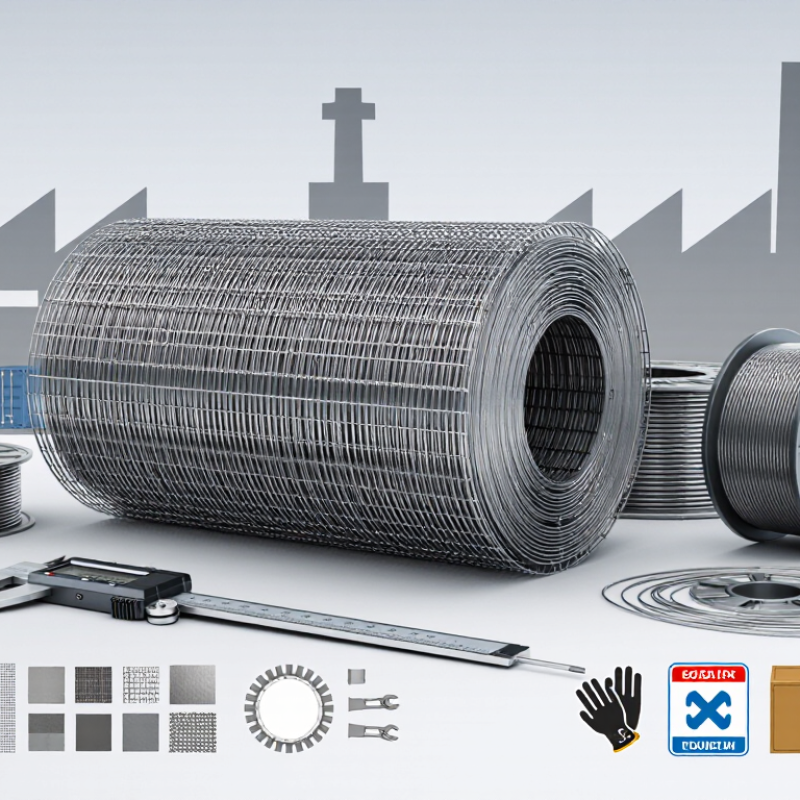
Stainless Wire Mesh Grades: 304, 316, and 316L Chemical Profiles
For global buyers, stainless wire mesh selection should begin with chemical composition, not appearance. Grade 304 typically contains about 18% chromium and 8% nickel. It offers reliable corrosion resistance for food equipment, filtration, screening, and indoor industrial use. However, 304 can struggle in chloride-rich environments, such as coastal air or salt-processing areas.
Grade 316 adds molybdenum, usually around 2–3%, which improves resistance to pitting and crevice corrosion. Its nickel content is commonly higher than 304. Grade 316L has a lower carbon limit, often no more than 0.03%, reducing the risk of carbide precipitation after welding. That detail matters for welded frames and fabricated mesh panels. Small difference. Practical consequence.
Experienced manufacturers should provide heat numbers, chemical test reports, wire diameter records, and weave inspection data. Buyers should compare the certificate with the required standard, because published percentages can vary slightly by specification. I have seen mesh chosen by grade alone, while wire hardness and opening accuracy caused the real failure. For demanding service, verify chloride exposure, temperature, cleaning chemicals, and weld conditions before approving production. A polished surface looks reassuring, but it does not replace traceability or testing.
Top Stainless Wire Mesh Manufacturers for Global Buyers? - Stainless Wire Mesh Grades: 304, 316, and 316L Chemical Profiles
Comparative reference for selecting stainless steel wire mesh by chemical composition, corrosion resistance, fabrication characteristics, and typical service conditions.
| Specification / Selection Factor | 304 Stainless Steel Wire Mesh | 316 Stainless Steel Wire Mesh | 316L Stainless Steel Wire Mesh |
|---|---|---|---|
| Common designation | Type 304 / UNS S30400 | Type 316 / UNS S31600 | Type 316L / UNS S31603 |
| Carbon, C, maximum | 0.08 wt% | 0.08 wt% | 0.03 wt% |
| Chromium, Cr | 18.0–20.0 wt% | 16.0–18.0 wt% | 16.0–18.0 wt% |
| Nickel, Ni | 8.0–10.5 wt% | 10.0–14.0 wt% | 10.0–14.0 wt% |
| Molybdenum, Mo | Not specified | 2.0–3.0 wt% | 2.0–3.0 wt% |
| Manganese, Mn, maximum | 2.00 wt% | 2.00 wt% | 2.00 wt% |
| Silicon, Si, maximum | 1.00 wt% | 1.00 wt% | 1.00 wt% |
| Phosphorus, P, maximum | 0.045 wt% | 0.045 wt% | 0.045 wt% |
| Sulfur, S, maximum | 0.030 wt% | 0.030 wt% | 0.030 wt% |
| Nitrogen, N, maximum | 0.10 wt% | 0.10 wt% | 0.10 wt% |
| Iron, Fe | Balance | Balance | Balance |
| Approximate density | 7.9–8.0 g/cm³ | Approximately 8.0 g/cm³ | Approximately 8.0 g/cm³ |
| Corrosion-resistance profile | Strong general atmospheric and industrial corrosion resistance; suitable for many indoor and outdoor applications. | Higher resistance to chlorides, salt exposure, and many chemical environments because of its molybdenum content. | Similar corrosion resistance to 316, with improved resistance to weld-related sensitization. |
| Resistance to chloride pitting | Moderate; less suitable for continuous seawater or high-chloride exposure. | Better than 304; commonly selected for marine and salt-containing environments. | Better than 304; commonly selected where welded sections may contact chlorides. |
| Weldability | Very good; post-weld corrosion performance may depend on section thickness and heat exposure. | Good; low-carbon 316L is generally preferred for welded assemblies. | Excellent for welded mesh frames and fabricated components; reduced risk of carbide precipitation. |
| Magnetic behavior | Generally non-magnetic in the annealed condition; may become slightly magnetic after cold drawing or weaving. | Generally non-magnetic in the annealed condition; cold work can induce slight magnetism. | Generally non-magnetic in the annealed condition; cold work can induce slight magnetism. |
| Typical wire-mesh applications | Screening, filtration, food-processing equipment, architectural panels, guarding, general industrial separation, and ventilation. | Marine screening, chemical processing, pharmaceutical equipment, coastal filtration, food-processing systems, and high-chloride environments. | Welded filtration assemblies, pharmaceutical and chemical equipment, marine fabrication, hygienic processing, and applications requiring extensive welding. |
| Relative material selection | Cost-effective general-purpose choice when chloride exposure is limited. | Premium choice when increased pitting and crevice-corrosion resistance is required. | Preferred over 316 when welding, heat-affected zones, or long-term intergranular-corrosion control is important. |
| Recommended buyer checks | Confirm mesh count, wire diameter, aperture tolerance, surface finish, and material certificate. | Confirm molybdenum range, chloride exposure, mesh opening, wire diameter, and corrosion-test requirements. | Confirm low-carbon certification, welding procedure, heat treatment condition, dimensional tolerance, and surface cleanliness. |
Related Posts
-
2026 Top Stainless Wire Mesh Suppliers for Global Buyers
-
What Is the Best Stainless Wire Mesh from China?
-
2026 How to Choose the Right Wire Mesh Filter for Your Needs?
-
2026 Top SS Wire Mesh Types for Global Buyers Needs?
-
What is the Best Stainless Steel Mesh Screen for Your Needs?
-
Unlocking the Versatility of Fine Wire Mesh: Applications You Didn't Know About!