2026 How to Choose the Right Wire Mesh Filter for Your Needs?
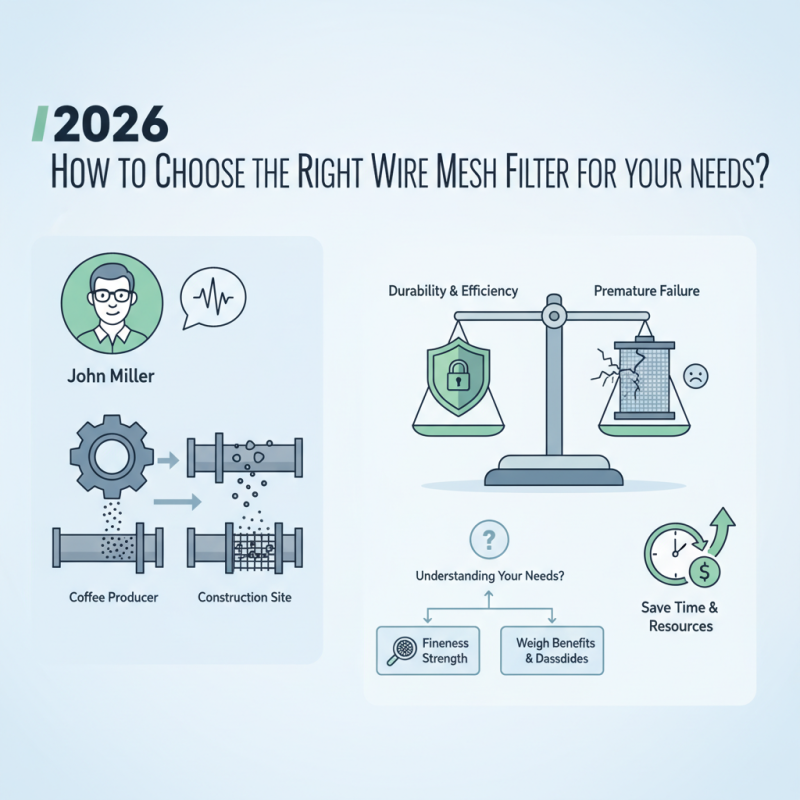
Choosing the right wire mesh filter can be complex. With so many options, it’s easy to feel overwhelmed. Experts like John Miller, a recognized leader in filtration technology, emphasize the importance of selection. He states, "The right wire mesh filter can make or break your filtration process."
Understanding your specific needs is crucial. Different industries require different specifications. A coffee producer may need a finer mesh than a construction site. High-quality mesh offers durability and efficiency. However, not every filter suits every application. This variation can lead to poor results if not carefully considered.
Moreover, some filters may sacrifice strength for fineness. This trade-off can lead to premature failure. Thus, reflection on your requirements is essential. Ensure you weigh the benefits against potential downsides. Taking the time to choose wisely can save both time and resources in the long run.
Understanding Wire Mesh Filters: Types and Materials
When selecting a wire mesh filter, understanding its types and materials is paramount. Wire mesh filters come in various types, including woven wire mesh, welded wire mesh, and expanded metal mesh. Each type serves specific applications. For example, woven wire mesh is widely used for filtration due to its versatility and durability. Reports indicate that woven wire mesh filters can effectively retain particles ranging from 1 micron to several millimeters, depending on the mesh size.
Materials also play a crucial role. Stainless steel is a popular choice for its resistance to corrosion and higher temperatures. Aluminum offers lightweight options but lacks the durability of stainless steel. According to industry sources, around 40% of buyers prefer stainless steel filters due to their robustness. This choice is especially relevant in food and beverage industries, where hygiene is essential.
Tips: Always consider the environment where the filter will be used. Will it face high temperatures or corrosive substances? Evaluate the specific requirements of your application. A poor choice may lead to frequent replacements, causing downtime and additional costs. Consult with experts to ensure the filter meets all necessary standards for your operational needs. When in doubt, opt for higher quality materials. They may be more expensive initially but provide long-term savings.
2026 How to Choose the Right Wire Mesh Filter for Your Needs? - Understanding Wire Mesh Filters: Types and Materials
| Filter Type |
Material |
Mesh Size (microns) |
Application |
Temperature Resistance (°C) |
| Stainless Steel Mesh |
Stainless Steel 304 |
50 |
Food and Beverage |
Temperature up to 300 |
| Bronze Mesh |
Bronze |
100 |
Water Filtration |
Temperature up to 150 |
| Plastic Mesh |
Polypropylene |
150 |
Chemical Filtration |
Temperature up to 90 |
| Woven Mesh |
Stainless Steel 316 |
25 |
Oil and Gas |
Temperature up to 600 |
| Perforated Mesh |
Aluminum |
200 |
General Straining |
Temperature up to 200 |
Key Factors to Consider When Choosing Wire Mesh Filters
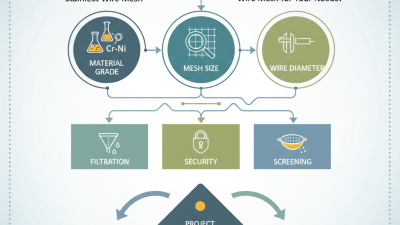
Choosing the right wire mesh filter involves several key factors.
Consider the material of the mesh.
Stainless steel is durable and resistant to corrosion.
However, other materials like nylon or polyester may suit specific applications.
Assessing the environment where the filter will be used is essential.
Will it face extreme temperatures or exposure to chemicals?
Make a list of these requirements before making a decision.
Next, think about the mesh size.
A larger mesh allows for higher flow rates but may not filter out fine particles.
Conversely, a smaller mesh provides better filtration.
You need to balance between efficiency and permeability.
Look at the application’s specific needs.
Capacities may differ based on the type of fluid or solid being filtered.
Sometimes, it’s a trial-and-error process to find the perfect fit.
Don’t overlook the filter's maintenance needs.
Some require more frequent cleaning or replacement.
A reliable filter is one that you can maintain easily. Lastly, consult with industry experts or experienced users.
Their insights can provide valuable perspectives that enhance your decision-making process. Aim to learn from each choice you make.
Assessing Filtration Requirements for Your Specific Application
Choosing the right wire mesh filter starts with understanding specific filtration requirements. Various industries require different mesh sizes and materials. For instance, the food and beverage sector typically demands
stainless steel filters due to corrosion resistance. A report by the Filtration Society indicates that 85% of food manufacturers prioritize durability in their filtration systems.
Assessing application needs involves considering factors like particle size and flow rate. If a filter supports a high flow volume, it may require a coarser mesh. Yet, minimizing particle capture can lead to reduced efficiency, creating a potential risk in quality control.
Research from the Institute of Environmental Sciences shows that improper filtration not only affects product purity but can also lead to material wastage, costing companies thousands annually.
Additionally, understanding the environmental conditions is crucial. High temperatures or chemical exposure can degrade filter materials over time. Proper material selection is essential to maintain reliability. However, the perfect filter may not exist. It often requires a balance between performance and cost, leading to ongoing discussions among engineers and procurement teams. These ongoing evaluations drive innovation in filter technologies, reflecting a commitment to enhanced performance.
Evaluating Wire Mesh Filter Specifications and Performance
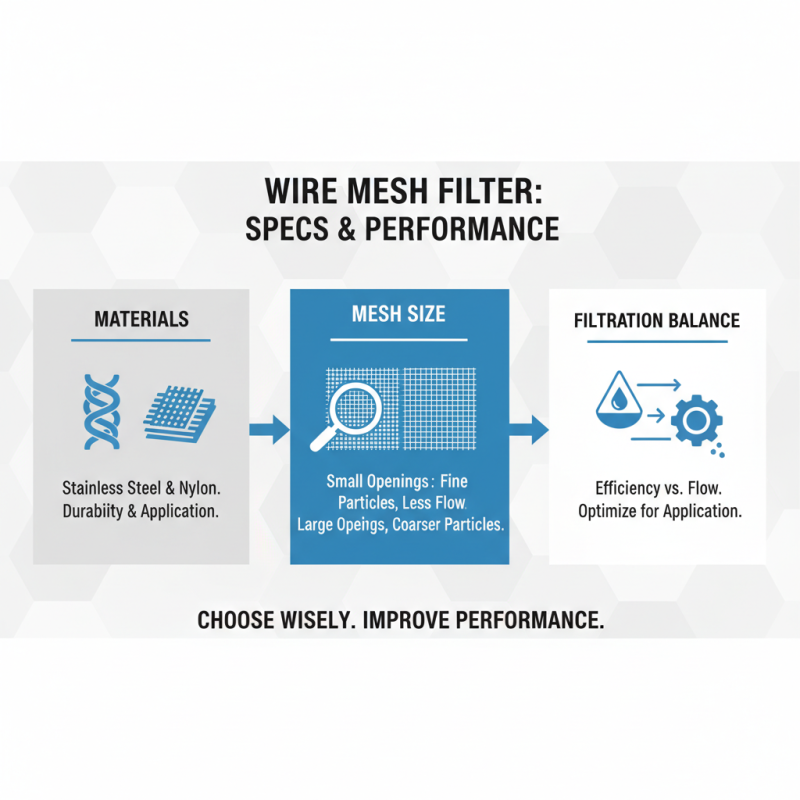
When selecting a wire mesh filter, understanding its specifications is crucial. Various materials, such as stainless steel or nylon, affect both durability and application. The mesh's opening size directly influences filtration efficiency. Smaller openings trap finer particles, while larger ones allow for more fluid flow. This balance is critical for performance in your specific application.
Performance metrics should not be overlooked. Consider how the filter withstands pressure changes and temperature variations. Testing under real-world conditions gives better insights into performance. Pay attention to the thickness of the wire; it determines the filter's lifespan. While a thicker wire often means greater strength, it can also affect flow rates negatively.
Evaluating these factors can seem daunting at first. It may require some trial and error to find the perfect fit for your requirements. Relying on generic data can lead to suboptimal choices. Conducting practical assessments is often necessary to understand the filter's true capabilities. Make adjustments as you gather more information during your experience with the filter.
Maintenance and Replacement: Ensuring Longevity of Wire Mesh Filters
Maintaining wired mesh filters is crucial for their longevity and efficiency. Regular inspections are essential.
Experts recommend checking filters at least once a month to identify any wear or damage.
Neglecting this can lead to decreased filtration performance or costly equipment failures. A report from the Filtration Society
indicates that up to 25% of machinery downtime involves filter issues.
Cleaning procedures vary based on the application. In some settings, a simple rinse may suffice, while others may require
professional cleaning methods. Using the right cleaning agents is vital, as harsh chemicals can damage the mesh.
Replace filters regularly according to the manufacturer's guidelines. A study by the
International Journal of Industrial Filters revealed that proper maintenance can extend filter life by up to
30%. Implementing these practices can prevent unnecessary expenses and enhance overall system reliability.
Be mindful of the signs of deterioration. If flow rates drop significantly, or if the mesh appears discolored or structurally compromised,
it's time to reconsider your strategy. Addressing these issues proactively is often overlooked but is a wise approach to ensure
optimal performance.