
How to Choose the Right Fine Wire Mesh for Your Needs?

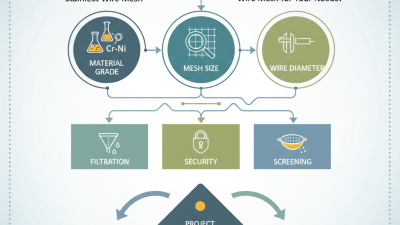
Choosing the right fine wire mesh is rarely a simple matter of selecting the smallest opening. The correct choice depends on the material being screened, operating temperature, pressure, cleaning method, and expected service life. A mesh that performs well in a dry laboratory test may clog quickly in a dusty production line.

Michael J. Dvorak, a senior filtration engineer with more than 25 years of industrial experience, explains: “Mesh selection begins with the process, not the catalog.” That principle deserves attention. Wire diameter, weave pattern, aperture size, alloy, and tensile strength work together. A stainless steel fine wire mesh may resist corrosion, yet still fail if its wires are too delicate for repeated vibration. Small details matter.

Feel the difference.

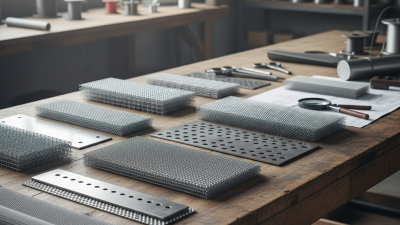
Before ordering, request a sample and test it with the actual powder, liquid, or gas. Check blinding, throughput, pressure loss, and cleaning performance. Measure the opening size carefully. Nominal specifications can hide practical differences between suppliers. Ask for material certificates and inspection records, especially when consistency affects product quality.

There is no universal “best” mesh. That is an uncomfortable truth. Engineers sometimes focus too heavily on filtration precision and overlook handling, installation, or replacement costs. A slightly coarser mesh may offer better stability and lower downtime. The final decision should balance separation accuracy, durability, maintenance, and budget. Careful testing turns a theoretical choice into a dependable one.
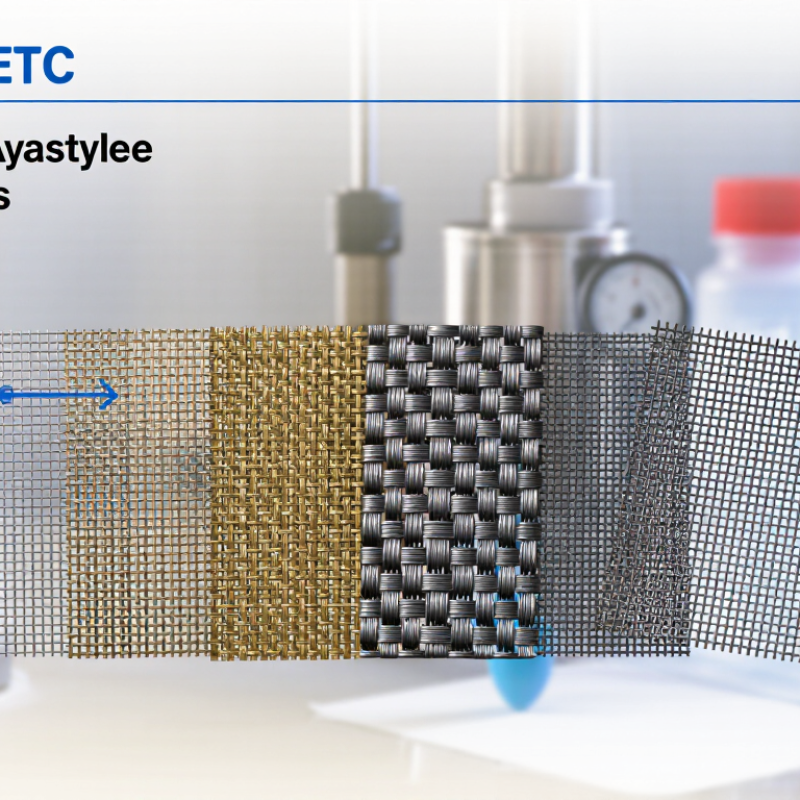
How to Choose the Right Fine Wire Mesh for Your Needs?

Define the Application and Performance Requirements

Choosing fine wire mesh starts with the application, not the catalog photo. Describe what the mesh must do. Will it filter liquid, separate powder, shield sensitive equipment, or support a heated process? Record particle size, flow rate, temperature, pressure, and contact chemicals. A mesh used in a clean water line may fail quickly in an abrasive powder stream. Real operating conditions matter. They often change.

Translate these conditions into measurable requirements. Specify opening size, wire diameter, open area, strength, corrosion resistance, and allowable pressure drop. For filtration, test the target particle range under realistic flow. A nominal opening alone does not predict service life. It can mislead. Consider whether the mesh needs a frame, protective layer, or regular cleaning. I have seen projects focus on capture efficiency while overlooking installation tension. Loose mesh vibrates, wears, and produces inconsistent results.

Tips

Create a one-page requirement sheet before requesting samples. Include the fluid or material, operating temperature, pressure, cleaning method, exposure time, and replacement schedule. Ask for test data, dimensional tolerances, and material traceability. If the process is uncertain, test two mesh specifications instead of trusting an assumption. Document the result. A short trial may reveal blinding, stretching, or unexpected corrosion. Recheck the specification after testing; the first version is rarely perfect.

Select the Appropriate Mesh Material and Wire Type

How to Choose the Right Fine Wire Mesh for Your Needs?

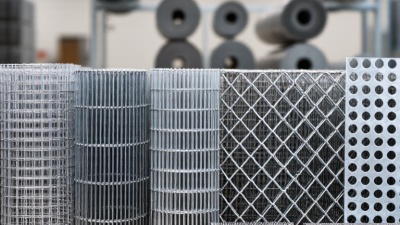
Selecting fine wire mesh starts with the material, not the catalog image. Stainless steel suits humid environments, filtration, and repeated cleaning. It offers strong corrosion resistance and stable dimensions. Copper and brass conduct electricity well, but they may tarnish or soften under harsh conditions. Nylon mesh is lightweight and flexible. However, it may not tolerate high temperatures or aggressive chemicals.

Wire type also changes performance. Plain wire is suitable for general screening and moderate handling. Spring-tempered wire provides useful resilience when the mesh must flex repeatedly. Hard-drawn wire offers higher stiffness, while annealed wire is easier to shape around frames or curved surfaces. Consider wire diameter carefully. A thinner wire creates more open area, but it can damage more easily. A thicker wire improves strength and reduces flow space.

Tips: Check temperature, chemical exposure, load, and cleaning methods before choosing. Ask for a sample and measure the actual opening. Small differences matter. A common mistake is selecting mesh by opening size alone. That choice may ignore edge support, vibration, or installation tension. Recheck the design under real working conditions, because laboratory assumptions can be incomplete.

Determine the Ideal Mesh Opening and Wire Diameter

Choosing fine wire mesh starts with the mesh opening, not the material name. The opening controls particle retention, liquid flow, and screening accuracy. Measure the target particle size carefully, then select an opening slightly smaller than the particle you must retain. A small difference matters. For example, a 100-micron opening may separate material that passes through a 150-micron opening. However, real particles are rarely perfectly round, so laboratory testing remains important.

Wire diameter affects strength, open area, and pressure drop. Thicker wire improves durability and resists handling damage, but it reduces the percentage of open space. Finer wire increases flow and visibility, yet it may deform under tension. In practice, I compare the required opening with the smallest practical wire diameter. The calculation is useful, but it is not perfect. Vibration, temperature, corrosion, and cleaning methods can change performance.

Review the mesh specification with actual operating conditions. Check whether the mesh will face abrasion, repeated washing, or high pressure. A sample panel can reveal problems that drawings hide. During evaluation, inspect tension, flatness, and blocked openings under magnification. Do not trust a single catalog value. Record the opening size, wire diameter, test method, and inspection results. If the mesh fails during use, the opening may be correct while the wire diameter is simply too weak.

Compare Weave Patterns, Strength, and Filtration Accuracy

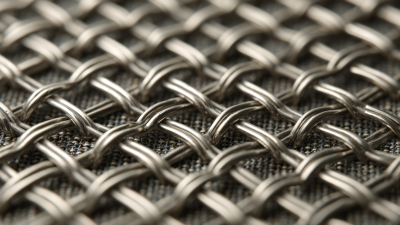
Choosing fine wire mesh starts with the weave pattern, not the mesh count alone. Plain weave offers stable openings and predictable filtration, making it suitable for powder screening and liquid pre-filtration. Twill weave places wires more closely and can produce smaller apertures, but it usually creates higher pressure loss. Dutch weave uses different wire arrangements for very fine filtration and improved retention. It is less transparent, though.

Strength depends on wire diameter, alloy, weave density, and operating stress. A heavier wire generally resists abrasion and pressure better, while a finer wire improves open area and flow. ASTM E11 specifies test sieve requirements, including aperture tolerances and inspection methods. ISO 9044 also classifies woven wire cloth by aperture and manufacturing quality. These standards matter because two meshes with the same nominal count may not filter identically.

Filtration accuracy needs testing.

Industry data supports careful specification. Grand View Research reported that the global industrial filtration market reached approximately USD 41.78 billion in 2023, with growth expected through 2030. That expansion reflects stricter process control, but market growth does not guarantee a correct mesh choice. In practice, measure particle size, flow rate, temperature, and pressure together. A 25-micron opening may retain the target particles, yet clog quickly in a dusty process. This is where selection often becomes imperfect. Pilot testing, cleaning trials, and repeated aperture checks can reveal weaknesses that a catalog cannot.

Evaluate Surface Finish, Durability, and Maintenance Needs

Choosing fine wire mesh starts with its surface, not its opening size alone. A smooth finish reduces snagging, residue buildup, and cleaning time. Run a clean fingertip across the mesh. It should feel even, without sharp projections or loose wires. Hold a sample under angled light. Scratches, uneven weaving, and dull patches become easier to detect. In practical inspections, these small flaws often predict later maintenance trouble.

Durability depends on wire material, diameter, tension, and exposure conditions. Mesh near moisture needs strong corrosion resistance, especially where salts or cleaning chemicals are present. Compare the expected temperature with the mesh’s rated working range. Repeated flexing can fatigue fine wires, even when the mesh looks undamaged. Ask for test data, but do not treat laboratory results as guarantees. Real airflow, vibration, and handling may differ from controlled conditions. This is where selection can become imperfect.

Maintenance needs should shape the design before purchase. A mesh that traps powder or fibers may require frequent brushing, washing, or replacement. Check whether operators can remove it without bending the frame. Use soft brushes and approved cleaners, then dry the mesh fully. Avoid aggressive scraping; it can change the opening size. Record inspection dates, visible wear, and cleaning methods. That record reveals whether the chosen finish is truly practical. Sometimes, a slightly coarser mesh lasts longer because it is easier to maintain.

How to Choose the Right Fine Wire Mesh for Your Needs? – Evaluate Surface Finish, Durability, and Maintenance Needs

Mesh Option Typical Material and Construction Common Fine-Mesh Range Surface Finish Durability Maintenance Needs Best-Suited Conditions Selection Guidance
304 Stainless Steel Mesh Austenitic stainless steel, commonly woven in plain or twill patterns. Approximately 20–400 mesh, depending on wire diameter and opening size. Bright, smooth, and cleanable; options may include mill finish, polished, or electropolished surfaces. Very good resistance to oxidation, abrasion, and many general industrial environments. Low to moderate; remove trapped particles and rinse after exposure to salts, chemicals, or process residues. Indoor filtration, screening, food-processing areas, ventilation, and general industrial use. A practical general-purpose choice when corrosion resistance and cleanability are important but severe chloride exposure is not expected.
316 Stainless Steel Mesh Austenitic stainless steel containing molybdenum for improved resistance to chloride-related corrosion. Approximately 20–400 mesh, subject to wire diameter and manufacturing method. Smooth and hygienic; polished or electropolished finishes can reduce surface roughness and simplify cleaning. Excellent corrosion resistance in marine, humid, and many chemical-processing environments; not immune to all chemicals or crevice corrosion. Low; periodic washing is recommended, especially where salt, deposits, or corrosive residues can accumulate. Marine locations, coastal air, pharmaceutical and food equipment, chemical processing, and washdown areas. Choose this grade when chloride exposure, frequent washdown, or higher corrosion resistance justifies the additional material cost.
Galvanized Carbon Steel Mesh Carbon steel wire protected by a zinc coating applied before or after weaving. Commonly available from coarse screening through fine industrial mesh sizes. Zinc-coated gray or silver appearance; the coating can be damaged by cutting, bending, abrasion, or aggressive cleaning. Good in dry or mildly humid environments; corrosion resistance decreases when the zinc layer is worn or exposed to acidic or alkaline conditions. Moderate; inspect for white corrosion products, scratches, exposed steel, and damaged edges. Cost-sensitive screens, agricultural equipment, dry-air filtration, guards, and general-purpose enclosures. Use where initial cost matters and the mesh will not face prolonged moisture, salt spray, or aggressive chemicals.
Plain Carbon Steel Mesh Uncoated low-carbon steel wire woven or welded into the required opening pattern. Available in many mesh sizes, including fine screening configurations. Usually a plain metallic or lightly oiled finish; it may require painting, plating, or another protective treatment. High mechanical strength in suitable wire diameters, but poor unprotected corrosion resistance in humid or wet conditions. High; keep dry, remove contaminants, and renew protective coatings when damaged. Dry indoor equipment, temporary screening, heavy-duty applications where strength is prioritized, and parts requiring post-treatment. Select only when corrosion can be controlled through a dry environment, coating system, or scheduled replacement program.
Copper or Brass Mesh Copper or copper-zinc alloy wire, typically selected for conductivity, appearance, or specialized filtration. Fine woven mesh is widely available, with opening size determined by wire diameter and mesh count. Naturally warm metallic appearance; may darken or develop a patina through oxidation. Good electrical conductivity and moderate corrosion resistance; softer than stainless steel and more vulnerable to deformation and abrasion. Moderate; clean gently and avoid harsh chemicals that can accelerate discoloration or material attack. Electromagnetic shielding, decorative panels, air circulation, specialist filtration, and electrical applications. Choose when conductivity, appearance, or shielding performance is more important than maximum abrasion and corrosion resistance.
Polymer-Coated Wire Mesh Metal wire covered with a plastic or polymer layer for added insulation, color, or environmental protection. Fine to medium mesh sizes, depending on coating thickness and required opening accuracy. Smooth, nonmetallic outer surface; coating quality depends on uniform thickness and adhesion. Good resistance to moisture and some chemicals; performance may decline under ultraviolet exposure, heat, cutting, or abrasion. Moderate; use nonabrasive cleaning and inspect regularly for cracking, peeling, or exposed wire. Protective guards, outdoor screens, handling areas, and applications requiring electrical isolation or a softer contact surface. Verify operating temperature, ultraviolet exposure, chemical compatibility, and coating thickness before choosing this option.
Practical selection checklist: Confirm the required mesh opening, wire diameter, open-area percentage, maximum operating temperature, chemical exposure, expected load, cleaning method, and acceptable maintenance interval. A smoother finish generally improves cleanability, while the correct material grade and wire diameter have the greatest influence on service durability.