
2026 Best Wire Mesh Screen Types for Global Buyers?

Choosing the right wire mesh screen in 2026 requires more than comparing prices or product photos. Global buyers must examine material grade, opening size, wire diameter, surface finish, and manufacturing consistency. A screen that looks strong may fail under heat, vibration, moisture, or repeated cleaning. Small details matter.

This guide reviews practical wire mesh screen types for filtration, ventilation, guarding, construction, and industrial separation. It considers stainless steel, galvanized steel, aluminum, welded mesh, woven mesh, perforated mesh, and specialized options. Each type offers different strengths. Stainless steel can resist corrosion. Galvanized steel may provide economical outdoor protection. Welded mesh often delivers stable geometry, while woven mesh supports precise filtration.

Real purchasing decisions also depend on supplier experience and documented quality control. Buyers should request material certificates, mesh measurements, sample pieces, tolerance data, and test reports where appropriate. Clear drawings can prevent costly misunderstandings. Packaging deserves attention too. Wet cartons, crushed rolls, or poorly protected edges can damage usable material before installation.

No single mesh suits every market. That is the difficult part. A low-cost choice may become expensive after replacement, cleaning problems, or fitting delays. Even experienced buyers can overlook installation conditions or local supply limits. Therefore, this 2026 overview focuses on verified specifications, realistic applications, and thoughtful comparison. It does not promise a perfect answer. Instead, it offers a dependable starting point for selecting mesh with greater confidence.
2026 Best Wire Mesh Screen Types for Global Buyers?

What Is Wire Mesh Screen and How Is It Classified?

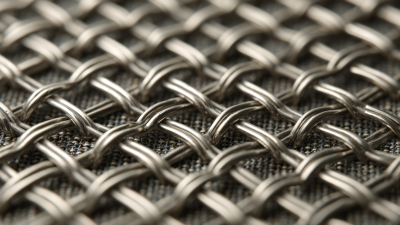
Wire mesh screen is a manufactured grid of metal wires. The wires form regular openings for screening, filtering, guarding, or reinforcement. Its classification begins with production method: woven mesh uses interlaced wires, while welded mesh joins wires at crossing points. Expanded and perforated sheets are related screening products, but they are not wire mesh.

Material creates another major category. Stainless steel suits humid, corrosive, or hygienic environments. Galvanized steel offers economical outdoor protection. Plain carbon steel supports lower-cost industrial applications, but it needs suitable corrosion control.

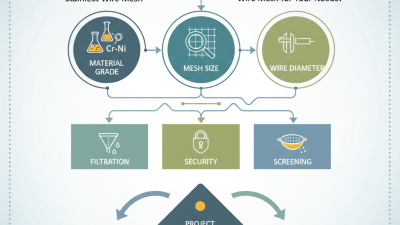
Buyers should compare wire diameter, opening size, mesh count, weave pattern, and surface finish. Small differences matter.

A 1.0-millimeter opening behaves very differently from a 5.0-millimeter opening.

MarketsandMarkets reports that the global wire mesh market could grow from about USD 8.4 billion in 2023 to USD 12.2 billion by 2028. Construction and infrastructure remain important demand areas. Grand View Research also identifies rising use in filtration, automotive production, and security systems.

These figures describe market direction, not a universal product specification. That distinction is often missed.

In practical purchasing reviews, buyers sometimes select mesh by price alone. This can create poor airflow, premature wear, or ineffective separation. ISO 9044 and ASTM E2016 provide useful reference points for industrial mesh terminology and specification control. Yet local conditions still deserve attention. Salt spray, vibration, cleaning chemicals, and installation tension can change the correct choice.

Main Wire Mesh Screen Types and Their Key Differences

2026 Best Wire Mesh Screen Types for Global Buyers?

Main Wire Mesh Screen Types and Their Key Differences

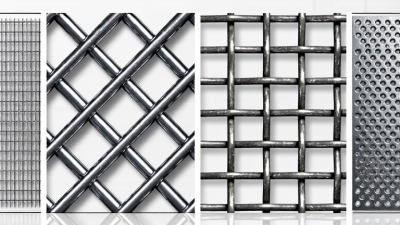
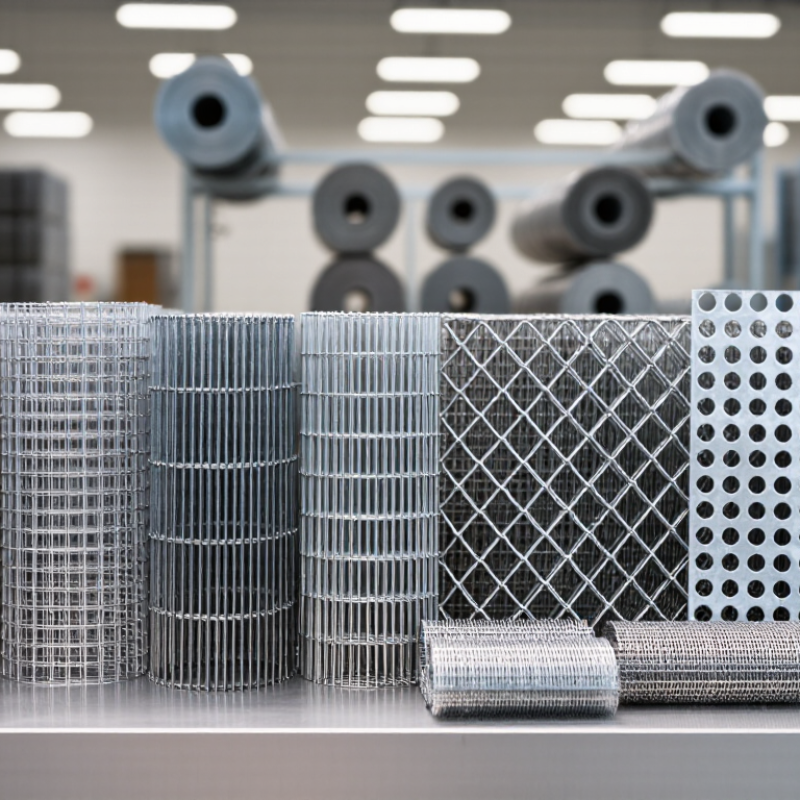
Wire mesh screens differ by manufacturing method, opening shape, strength, and cleaning behavior. Woven wire mesh uses interlaced wires, producing precise apertures for sieving, laboratory work, and fine filtration. Welded wire mesh joins wires at fixed intersections. It offers better rigidity for guards, partitions, and heavier screening.

Expanded metal is cut and stretched from one sheet, leaving diamond-shaped openings without loose intersections. It is lightweight and useful for walkways, ventilation panels, and protective covers. Perforated sheet uses punched holes, giving consistent open areas but less flexibility in custom aperture patterns. Knitted mesh remains flexible and absorbs vibration, making it suitable for mist separation and irregular surfaces.

The choice depends on more than opening size. Wire diameter, open-area percentage, corrosion resistance, and temperature exposure can change performance. According to Grand View Research’s 2024 wire mesh market outlook, construction and industrial applications remain major demand areas, although market estimates vary by product definition. That limitation matters.

A 2023 report from MarketsandMarkets also identifies filtration, infrastructure, and automotive uses as important growth segments. In practice, buyers should request aperture tolerance, tensile data, material certificates, and test methods. Do not compare prices alone.

It looks simple. Not always.

A thicker wire may improve service life but reduce flow and visibility. My practical concern is inconsistent terminology between suppliers. “Fine mesh” can mean different openings in different regions. Confirm measurements in millimetres, microns, or mesh count before approving samples.

2026 Best Wire Mesh Screen Types for Global Buyers? - Main Wire Mesh Screen Types and Their Key Differences

Screen Type Manufacturing Method Typical Opening Range Common Materials Main Advantages Typical Applications Key Limitations Best Buyer Selection Priority
Woven Wire Mesh Wires are interlaced in plain, twilled, or other weave patterns. Approximately 20 µm to 25 mm, depending on wire diameter and mesh count. Stainless steel, carbon steel, galvanized steel, aluminum, copper alloys, and nickel alloys. Wide filtration range, accurate openings, flexible specifications, and good surface uniformity. Liquid and air filtration, sieving, insect screens, architectural panels, and industrial separation. Can deform under heavy impact; very fine mesh may have lower flow capacity and require careful handling. Opening accuracy, mesh count, wire diameter, alloy, and filtration rating.
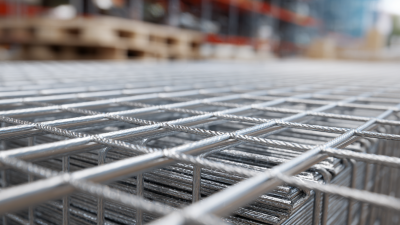
Welded Wire Mesh Longitudinal and transverse wires are resistance-welded at each intersection. Commonly about 6 mm to 300 mm square or rectangular openings. Low-carbon steel, galvanized steel, stainless steel, and PVC-coated steel. High rigidity, consistent grid geometry, easy installation, and strong load-bearing performance. Fencing, animal enclosures, construction reinforcement, machine guards, racks, and concrete reinforcement. Less suitable than woven mesh for very fine filtration; weld areas may require corrosion protection. Weld strength, panel flatness, wire diameter, surface treatment, and dimensional tolerance.
Expanded Metal Mesh A solid sheet is simultaneously slit and stretched to form diamond-shaped openings. Typical short-way openings range from approximately 2 mm to 100 mm. Carbon steel, galvanized steel, stainless steel, aluminum, and weather-resistant steel. High strength-to-weight ratio, no loose intersections, good ventilation, and strong anti-slip characteristics. Walkways, platforms, stairs, machine guards, partitions, facades, and ventilation panels. Not ideal for precision filtration; sharp edges and directional openings may affect handling and installation. Sheet thickness, strand width, opening dimensions, open-area percentage, and corrosion resistance.
Perforated Metal Sheet Round, square, slotted, or custom holes are punched or otherwise formed in metal sheet. Common hole diameters range from about 0.5 mm to 100 mm. Stainless steel, mild steel, galvanized steel, aluminum, and copper alloys. Precisely controlled hole patterns, good rigidity, clean appearance, and predictable open area. Acoustic panels, air diffusers, equipment covers, screening, architectural cladding, and grain processing. Generally heavier and less flexible than wire mesh; small holes can increase pressure drop. Hole shape, pitch, open-area ratio, sheet thickness, burr control, and appearance.
Sintered Wire Mesh Multiple layers of woven wire mesh are pressure-sintered and bonded into a rigid filter panel. Common filtration ratings are approximately 0.5 µm to 200 µm. Primarily stainless steel; other high-temperature alloys may be used for specialized service. High mechanical strength, stable filtration rating, excellent rigidity, and resistance to backwashing. Polymer filtration, hydraulic systems, pharmaceutical processing, food processing, and high-temperature gas filtration. Higher cost, heavier construction, and potentially greater pressure drop than single-layer mesh. Filtration grade, layer structure, permeability, operating temperature, pressure rating, and cleanability.
Crimped Wire Mesh Wires are pre-crimped before weaving to lock the mesh structure in place. Often approximately 5 mm to 100 mm openings for heavy-duty screening. High-carbon steel, stainless steel, galvanized steel, and abrasion-resistant alloys. Excellent rigidity, wear resistance, vibration tolerance, and suitability for coarse screening. Mining screens, quarrying, aggregate grading, stone processing, and heavy-duty security panels. Coarser openings limit fine filtration; heavy wire can increase weight and handling costs. Abrasion resistance, wire profile, opening stability, tensile strength, and replacement availability.
Dutch Weave Wire Mesh Warp and weft wires use different diameters and counts to create a dense filtration structure. Fine filtration ratings commonly range from approximately 5 µm to 300 µm. Stainless steel and selected nickel-based alloys for demanding environments. High pressure resistance, strong particle retention, and improved resistance to wire displacement. Polymer melt filtration, fuel filtration, hydraulic filtration, and pressure-sensitive industrial processes. Lower permeability than more open weaves; cleaning and fabrication can be more demanding. Absolute or nominal filtration rating, pressure drop, permeability, alloy, and edge treatment.
Plastic-Coated Wire Mesh Metal wire mesh is coated with PVC or another polymer after welding or weaving. Commonly about 10 mm to 100 mm openings, depending on the base mesh. PVC-coated galvanized steel, PVC-coated carbon steel, and polymer-coated steel wire. Improved corrosion protection, reduced sharpness, color options, and suitability for outdoor use. Garden fencing, animal housing, sports enclosures, safety barriers, and residential screening. Polymer coatings can age under ultraviolet exposure, heat, abrasion, or harsh chemicals. Coating thickness, adhesion, UV resistance, base-wire protection, color stability, and climate suitability.
Buyer Note: Final selection should be based on required opening size, load or pressure, corrosion and temperature conditions, filtration performance, installation method, service life, and applicable local standards.

Materials, Weave Patterns, and Performance Characteristics

2026 Best Wire Mesh Screen Types for Global Buyers?

Selecting wire mesh screen starts with the working environment, not appearance. Stainless steel resists moisture, cleaning chemicals, and repeated handling. Galvanized steel offers practical corrosion protection for many dry or sheltered applications. Plain steel remains useful where strength matters and surface protection is managed. Each material behaves differently under heat, abrasion, and outdoor exposure. I have seen buyers choose fine stainless mesh for dusty areas, then discover pressure loss during operation.

Weave pattern directly affects performance. Plain weave provides stable openings and straightforward inspection. Twill weave can support finer filtration with stronger wires. Dutch weave uses layered wire arrangements for precise separation, but it may require more cleaning pressure. Mesh count alone can mislead. Wire diameter, opening size, tensile strength, and open-area percentage should be checked together. A finer screen is not automatically better. It may clog sooner. Small errors in sizing can become expensive during replacement.

Tips: Request material certificates, aperture data, and dimensional tolerances before ordering. Compare samples under real airflow, liquid flow, or vibration conditions. Check edge finishing carefully; rough edges can damage frames and gloves. Ask for corrosion or heat test evidence when the environment is severe. Standards help, but field conditions still matter. No selection is perfect. A sound choice balances filtration accuracy, service life, cleaning effort, and total replacement cost.

How to Select the Right Wire Mesh Screen for Each Application

2026 Best Wire Mesh Screen Types for Global Buyers?

How to Select the Right Wire Mesh Screen for Each Application

Selecting wire mesh starts with the working conditions, not the lowest quotation. Choose woven mesh for accurate filtration and consistent openings. Welded mesh suits panels, guards, and structural enclosures. Perforated or expanded metal may perform better when airflow, strength, and low weight matter.

Define the opening size, wire diameter, sheet dimensions, and load before requesting prices. Fine openings can improve separation, but they may restrict flow and clog quickly. Coarser mesh allows higher throughput. Check the material against moisture, chemicals, heat, and outdoor exposure. Stainless steel often handles corrosion well, while coated carbon steel can support budget-sensitive projects. The coating must match the environment.

Ask suppliers for material certificates, dimensional tolerances, test samples, and production traceability. Confirm whether the quoted opening is nominal or measured. That detail causes avoidable disputes. A sample test using the actual powder, liquid, or aggregate is more reliable than a catalog image. This approach is not flawless. Installation tension, cleaning methods, and vibration can change performance. Review those conditions with the engineering team before approving the final mesh.

2026 Best Wire Mesh Screen Types for Global Buyers

Reference opening sizes based on common ASTM E11 sieve designations. Use finer openings for precision separation and larger openings for high-flow, coarse screening.

Selection guidance: coarse screens around 0.850 mm suit gravel, aggregate, and pre-screening; medium openings from 0.250–0.425 mm are commonly used for sand, granules, and general classification; fine screens from 0.075–0.150 mm support powder and laboratory particle separation. Actual wire-cloth aperture depends on mesh count, wire diameter, weave, and tolerance, so buyers should confirm the required opening, material grade, operating temperature, corrosion conditions, and cleaning method before ordering.

Global Buying Factors: Standards, Quality, Pricing, and Supply Chains

2026 Best Wire Mesh Screen Types for Global Buyers?

Global buyers should match mesh type to the working environment, not only the product drawing. Woven mesh suits precise filtration, while welded mesh offers stronger panel stability. Crimped mesh can support heavier screening loads. The choice depends on opening size, wire diameter, load, temperature, and exposure to moisture.
Standards must be written into the purchase order. Specify aperture tolerance, material grade, surface treatment, edge condition, and inspection method. Ask for mill certificates, dimensional records, and sample photographs before production. In practical sourcing work, small differences in opening size have caused unexpected flow changes. Details matter. Independent inspection is useful when the supplier is unfamiliar or the order is large.
Pricing requires more than comparing unit costs. Include tooling, minimum order quantities, packing, inland transport, customs charges, and delivery insurance. Price alone misleads. A low quote may hide thinner wire or weaker welds. Review samples under actual operating conditions, because laboratory appearance can be reassuring but incomplete. Supply chains also need realistic planning. Confirm production capacity, port routes, lead times, spare material, and communication procedures. Plan for delays. A second qualified source may reduce risk, although maintaining two sources can increase testing costs and management work. That trade-off deserves honest review.