
How to Choose Aluminum Woven Wire Mesh

Choosing aluminum woven wire mesh is not just a matter of selecting a pattern from a product list. The right mesh must suit its working environment, load, and required opening size. Start with the alloy, wire diameter, aperture, and weave style. These details affect strength, airflow, visibility, and weight. Small details matter. A finer opening may improve screening, but it can also restrict flow and collect debris more easily. A heavier wire may resist handling damage, yet add weight and reduce open area.

Think about where the mesh will be installed. Indoor partitions, ventilation panels, and outdoor guards may need different finishes and specifications. Moisture and salt exposure deserve attention, even though aluminum forms a natural oxide layer. Ask suppliers for measurable details, including opening tolerance, wire diameter, alloy designation, and any finish information. If possible, examine a sample beside the frame or material it must fit. A ruler or caliper can reveal differences that a product photo cannot. Not always. A stated mesh count alone may not tell you the clear opening or usable open area. Check those values directly. It is also worth asking how the mesh will be cut, tensioned, and supported; installation can change how it performs. There is no perfect choice for every job. Some specifications may need adjustment after testing, and that is a useful reason to compare samples before ordering. A careful decision balances published specifications with the conditions the mesh will actually face.
How to Choose Aluminum Woven Wire Mesh

Identify the Mesh’s Intended Use and Operating Environment

Before choosing aluminum woven wire mesh, define what it must do. A screen for ventilation needs open area and stable airflow; a guard may need smaller openings to keep fingers or debris away. Write down the target particle size, expected contact, and whether the mesh will carry any load. It is not a structural panel by default. Check the opening size and wire diameter together, since a fine weave can restrict airflow more than its appearance suggests. Measure the space, too. A few millimeters can matter when fitting a frame.

Then look closely at the operating environment. Indoors, dust and routine handling may be the main concerns. Outdoors, rain, salt spray, and trapped moisture can affect aluminum, especially around cut edges and joints. Keep it dry where possible. For hot equipment, confirm the actual service temperature with the supplier; nearby heat sources can change the mesh’s performance. Consider cleaning methods as well. Abrasive brushes can deform fine wires, while residue may collect in tight openings. One detail is easy to miss: installation tension. Over-tightening can distort the weave, but loose mesh may rattle or sag. A small sample installed in the intended frame can reveal problems that a specification sheet cannot. I would still verify the exact alloy and finish, because “aluminum mesh” alone leaves important questions unanswered.

Choose an Appropriate Weave Pattern and Opening Size

How to Choose Aluminum Woven Wire Mesh

Choose an Appropriate Weave Pattern and Opening Size

Start with the material you need to retain or pass through the mesh. Measure its smallest relevant dimension, then choose an opening that allows the intended flow without letting unwanted particles through. ASTM E11 lists standard sieve openings such as 125, 250, and 500 micrometers. These are useful reference points, not automatic specifications for every mesh order. Small details matter.

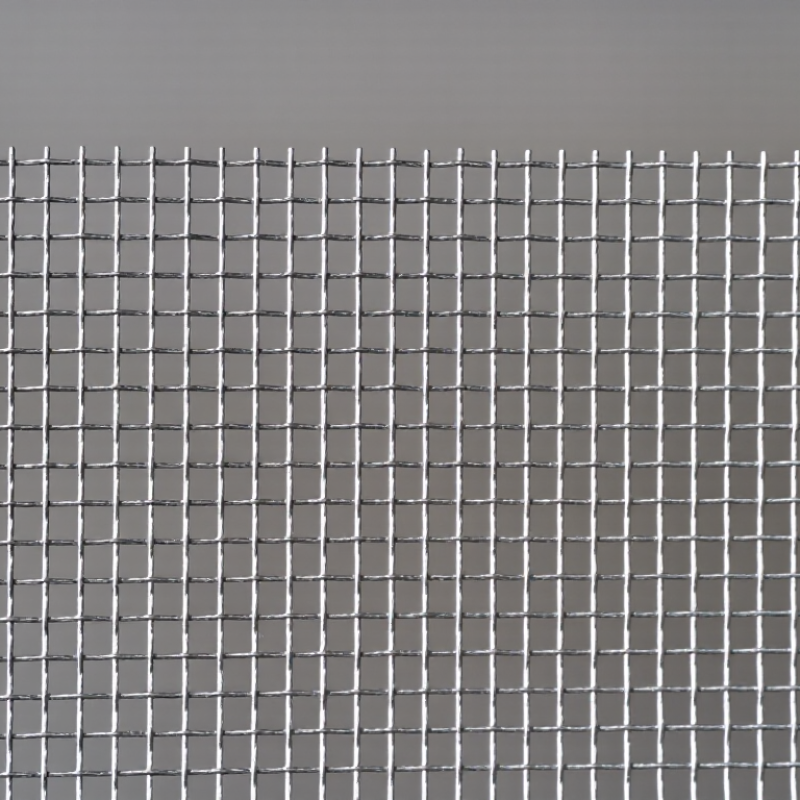
For general screening, plain weave creates a regular grid and is often easier to inspect. Twill weave can accommodate heavier wires in tighter openings, but its surface may be less open. ISO 9044:2016 identifies aperture, wire diameter, and tolerances as key woven-wire-cloth requirements. Compare all three: a stated opening alone does not tell you how much material can pass through. A thicker wire can reduce the open area, even when the opening size stays the same.

Before choosing, consider whether the mesh must resist clogging, support a load, or allow quick cleaning. Ask for the nominal opening, wire diameter, and permitted tolerances on the specification sheet. Then test a small sample under actual operating conditions. It may seem overly cautious, but dust, vibration, and irregular particles can change performance. I would still double-check the measurement method; nominal and measured openings are not always identical.

Match Wire Diameter and Aluminum Alloy to Required Strength

How to Choose Aluminum Woven Wire Mesh
Match Wire Diameter and Aluminum Alloy to Required Strength

Wire diameter and alloy work together to determine mesh strength. For a round wire, doubling its diameter gives four times the metal cross-sectional area, but not necessarily four times the finished mesh capacity. Weave crimp, opening size, support spacing, and load direction also matter. Small changes matter. The Aluminum Association’s Aluminum Standards and Data (2013) lists 6061-T6 wrought product with minimum tensile strength of about 290 MPa and yield strength of about 241 MPa. These figures are a useful reference, not a guarantee for drawn mesh wire; processing and temper can change its properties.

Choose diameter based on the load and the mesh’s unsupported span. A thicker wire may resist bending better, yet it also reduces open area and can make the fabric stiffer to handle. Alloy choice matters too: select a documented temper suited to the environment and forming needs, then confirm the supplier’s wire-specific test data. I would not specify mesh from alloy name alone; that shortcut can miss the effect of drawing and weaving.

Tips: Ask for tensile data, wire diameter tolerance, and temper certification for the actual production lot. Test a small panel under realistic support and loading conditions before ordering at scale. A neat specification still leaves some uncertainty: installation and edge restraint can change performance.

Assess Corrosion Resistance, Weight, and Fabrication Needs

Corrosion resistance depends on alloy, surface condition, and exposure. Coastal salt, trapped moisture, and acidic cleaning residues can stain or attack mesh. The Aluminum Association’s Aluminum Design Manual lists aluminum density at about 0.0975 lb/in³, or 2.70 g/cm³. That low material density helps reduce panel weight, but open mesh weighs less than a solid sheet because of its voids. Compare finished-panel weights, not density alone.

Check the alloy data sheet and the supplier’s corrosion guidance before specifying wire. Marine exposure may favor alloys with good corrosion performance, while a different alloy or temper may suit forming or joining. The ASM Handbook, Volume 13A, explains that corrosion behavior changes with material and environment; no alloy is immune in every setting. Also confirm wire diameter, opening size, edge treatment, and whether the mesh must be cut, bent, or welded. I would still test a sample: exposure assumptions can be wrong.

Tips: Request a small sample and check it in the actual cleaning or outdoor environment. Ask for alloy, temper, coating, and weight per panel. Then test a cut edge and one formed section; small fabrication details can matter.

Check Product Tolerances, Finish, and Applicable Standards

Start with the drawing, not the sample. Specify alloy, nominal aperture, wire diameter, and allowable variation before comparing quotations. ISO 9044:2016 sets requirements and tolerances for industrial woven wire cloth; ASTM E11 is relevant when mesh serves as test-sieve cloth. These standards are not interchangeable. Match the standard to the mesh’s intended use, then request measured aperture and wire-diameter results.

Finish affects both appearance and fit. Ask whether the mesh is supplied mill-finished, anodized, or coated, and confirm how that finish may affect openings. The Aluminum Association reports aluminum’s density as approximately 2.70 g/cm³, a useful reference when weight matters. But low mass alone does not establish suitability; alloy, wire diameter, and weave also affect strength and handling. A neat specification can still hide a poor fit.

Inspect a physical panel under consistent lighting. Measure openings at several points, including near the edges, and check for bent wires, uneven tension, or damaged finish. Request inspection records tied to the production lot, not just a generic certificate. One detail is easy to overlook: a sample may not reflect the full roll. If tolerances or finish requirements remain vague, pause and clarify them before approving production.

How to Choose Aluminum Woven Wire Mesh — Check Product Tolerances, Finish, and Applicable Standards

Check Point What to Specify Example or Acceptance Guidance Why It Matters
Mesh count Number of openings per linear inch, measured center-to-center. Example: 10 mesh means 10 openings per inch in each specified direction. Confirm whether the count applies to both warp and weft. Mesh count affects filtration, visibility, airflow, and the size of particles that can pass through.
Wire diameter and opening State wire diameter and nominal clear opening, with units. For plain square weave, a nominal example is 10 mesh with 0.020 in wire: pitch is 0.100 in, so the calculated opening is 0.080 in (2.032 mm). Actual supplied dimensions should be confirmed against the agreed specification. Wire diameter influences strength and open area; opening size affects screening performance.
Dimensional tolerances Set acceptance limits for mesh count, wire diameter, roll width, and cut length. Do not assume one universal tolerance. Specify the applicable standard and edition, or obtain written, product-specific tolerances from the supplier before ordering. Clear limits reduce disputes and help ensure the mesh fits the frame or assembly.
Weave pattern Identify plain weave, twill weave, or another required construction. Plain weave is a common choice for general-purpose mesh. Confirm the pattern on the drawing or purchase specification. Weave affects mesh stability, flexibility, and suitability for the intended opening and wire size.
Aluminum alloy and temper Specify the required alloy and temper when strength, formability, or corrosion performance matters. Request the alloy designation and supporting material documentation; do not rely on “aluminum” alone when a particular property is required. Different alloys and tempers can have different mechanical and fabrication properties.
Finish and surface condition Describe the required condition, such as mill finish or a specified coating or anodized finish. Confirm whether the finish is applied to the wire before weaving or to the woven mesh afterward, and agree on color, coverage, and inspection criteria where applicable. Finish can affect appearance, corrosion behavior, cleanability, and dimensional fit.
Applicable standards Reference the standard and edition that apply to the product and inspection. Potential references include ASTM E2016, Standard Specification for Industrial Woven Wire Cloth, and ISO 9044:2016, Industrial woven wire cloth — Technical requirements and testing. Confirm suitability for the specified mesh and material with the supplier. A named standard provides a common basis for technical requirements and testing; the purchase specification should identify the intended edition.
Inspection and records Agree on sampling, measurement methods, and required documents before production. Request inspection results for the agreed dimensions and, when required, material or finish documentation. Define how nonconforming material will be handled. Documented checks support traceability and consistent acceptance of delivered mesh.