How to Choose Aluminum Wire Mesh for Your Project?
Choosing aluminum wire mesh is not simply a matter of selecting a bright, lightweight material. The correct choice depends on opening size, wire diameter, alloy, temper, weave, finish, and working conditions. A mesh panel used for ventilation may need very different performance from one used for filtration, screening, protection, or decorative architecture. Small details matter. A 1 mm opening can change airflow, particle control, and cleaning requirements.
Dr. John E. Hatch, a respected aluminum materials specialist, emphasized a practical principle: “Material selection must begin with service conditions, not appearance.” That principle applies directly to aluminum wire mesh. Consider humidity, salt exposure, heat, vibration, pressure, and contact with other metals. Alloy 5052 may suit demanding environments better than a softer, less resistant grade. Plain aluminum can be sufficient indoors, but anodizing or another finish may improve durability and appearance outdoors. These choices should follow actual testing, not assumptions.
This guide explains how to compare mesh specifications with greater confidence. It examines mesh count, aperture, wire thickness, weave pattern, strength, corrosion resistance, and supplier documentation. A catalog description can sound precise. It may still hide important limitations. Check tolerances. Confirm the measured opening. Ask for alloy certificates when performance matters. One imperfect decision can cause clogging, sagging, premature oxidation, or costly replacement. The best selection balances function, budget, fabrication needs, and service life. It may not be the cheapest option. It should be the most defensible one for your project.
What Is Aluminum Wire Mesh and How Is It Made?
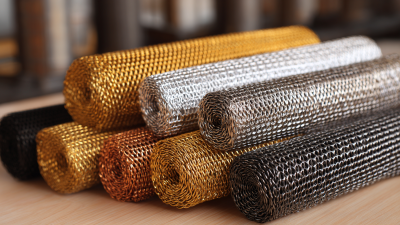
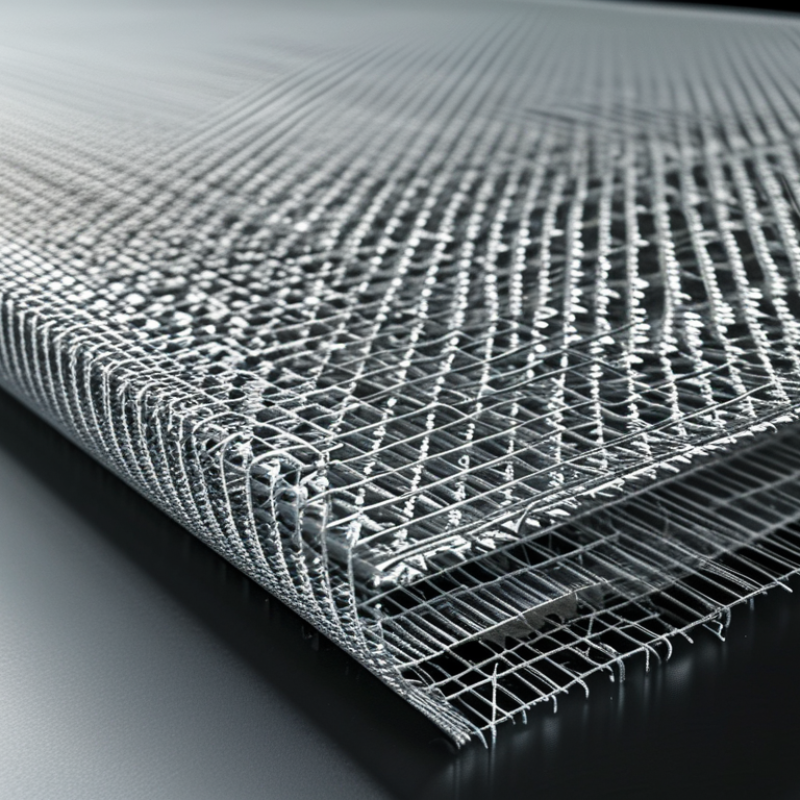
Aluminum wire mesh is a network of aluminum wires arranged in regular openings. It is lightweight, corrosion resistant, and easy to handle on site. The mesh may use pure aluminum or an alloy selected for strength, flexibility, and environmental exposure. Alloy choice matters near saltwater or industrial moisture.
Manufacturing usually begins with aluminum rod. The rod is drawn through dies until it reaches the required wire diameter. This process improves dimensional consistency, although excessive drawing can reduce flexibility. For woven mesh, machines interlace lengthwise and crosswise wires in plain, twill, or other patterns. For welded mesh, straight wires meet at right angles and are fused at each intersection. Some products are expanded from sheet, but that is not technically wire mesh.
During selection, check the opening size, wire diameter, mesh count, and edge treatment. A 10-millimeter opening allows more airflow, while a finer opening offers better screening. Larger wire usually improves rigidity, but it also increases weight and cost. I have seen project drawings specify “aluminum mesh” without naming the production method. That detail can cause trouble later. Ask for material grade, temper, tolerances, and test data before ordering. Uncoated aluminum can develop a dull surface over time. This is usually cosmetic, but not always. If the mesh will support pressure, impact, or frequent cleaning, laboratory data alone may not reflect real installation conditions. A small sample test is often wiser.
Which Project Requirements Determine the Right Mesh?
How to Choose Aluminum Wire Mesh for Your Project?
Which Project Requirements Determine the Right Mesh?
The right aluminum wire mesh starts with the project environment, not appearance. Indoor partitions may need a light alloy and a fine opening. Outdoor screens need better resistance to moisture, salt, and temperature changes. Coastal air can expose weak material choices quickly. Check the alloy, wire diameter, and surface treatment before comparing prices.
Opening size controls more than visibility. A small opening blocks finer particles but can restrict airflow and collect dust. A larger opening improves ventilation but may reduce protection. Measure the material, airflow, light, and access requirements in actual conditions. For a machine guard, confirm that the mesh can resist impact and remain securely fixed. For a filter, test pressure loss with the intended equipment.
I once focused too heavily on wire strength and overlooked installation space. That mistake made cutting and fastening unnecessarily difficult. It is worth checking panel dimensions, edge clearance, tension, and available tools before ordering. Ask for technical data, tolerance information, and a sample when performance matters. Test the sample under expected moisture, vibration, and cleaning conditions. Do not assume a thicker wire always performs better. It may add weight, reduce airflow, and increase fabrication work. A qualified supplier or engineer can review the selection against project drawings and applicable safety requirements.
How to Choose Aluminum Wire Mesh for Your Project?
Which project requirements determine the right mesh?
Larger mesh openings provide higher airflow, light transmission, and drainage, while finer mesh retains smaller particles. The examples below use common mesh counts with practical aluminum wire diameters. Select the aperture according to the smallest particle that must be retained, then confirm that the wire diameter and open area meet the project’s strength, visibility, ventilation, and weight requirements.
How Do Mesh Size, Wire Diameter, and Opening Shape Compare?
How to Choose Aluminum Wire Mesh for Your Project?
Mesh size, wire diameter, and opening shape affect performance in different ways. Mesh size usually describes the number of openings per inch, but opening size matters more for filtration. A finer mesh blocks smaller particles. It also reduces airflow and may collect dust faster. Wire diameter controls strength, weight, and resistance to bending. Thicker wire creates a stronger panel, but it reduces the clear opening. This trade-off is easy to underestimate.
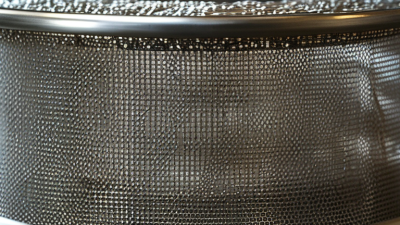
Opening shape also deserves attention. Square openings provide predictable airflow and simple measurement. Rectangular openings can improve visibility or directional screening in selected applications. Hexagonal patterns may offer useful open area, but they are harder to compare using mesh count alone. Always check the actual opening dimensions, not just the advertised mesh number. Aluminum is lightweight and naturally resistant to many outdoor conditions, yet surface damage, salt exposure, and poor framing can still shorten service life. Small details matter.
Tips: Measure the frame before ordering. Compare open-area percentage, wire diameter, and mesh tolerance together. Hold a sample against a light source to inspect uniformity. For dusty or vibrating equipment, test a small section first. That test may reveal a weak assumption. Ask for material and tolerance data in writing, then confirm the mesh matches your required airflow, visibility, or particle control.
How to Choose Aluminum Wire Mesh for Your Project? - How Do Mesh Size, Wire Diameter, and Opening Shape Compare?
Nominal Aluminum Wire Mesh Comparison
Mesh Count
(Openings per Linear Inch) |
Nominal Wire Diameter |
Approx. Square Opening |
Approx. Open Area |
Opening Shape |
Approx. Mesh Mass |
Typical Selection Consideration |
| 4 mesh |
0.047 in
(1.19 mm) |
0.203 in
(5.16 mm) |
66% |
Square |
0.95 kg/m² |
Large openings and relatively heavy wire; suitable where airflow and coarse screening are more important than fine filtration. |
| 6 mesh |
0.035 in
(0.89 mm) |
0.132 in
(3.35 mm) |
62% |
Square |
0.79 kg/m² |
A balanced option for general guards, ventilation panels, and coarse particle separation. |
| 8 mesh |
0.028 in
(0.71 mm) |
0.097 in
(2.46 mm) |
60% |
Square |
0.68 kg/m² |
Useful when moderate screening, visibility, and airflow are required in a lightweight panel. |
| 10 mesh |
0.025 in
(0.64 mm) |
0.075 in
(1.91 mm) |
56% |
Square |
0.67 kg/m² |
Common mid-range choice for insect-related screening, ventilation, and general-purpose enclosures. |
| 12 mesh |
0.020 in
(0.51 mm) |
0.063 in
(1.61 mm) |
57% |
Square |
0.52 kg/m² |
Provides a finer barrier while retaining substantial airflow; check the target particle or insect size before selecting. |
| 16 mesh |
0.015 in
(0.38 mm) |
0.048 in
(1.21 mm) |
58% |
Square |
0.39 kg/m² |
Suitable for finer screening applications where low weight and good visibility are desirable. |
| 20 mesh |
0.012 in
(0.30 mm) |
0.038 in
(0.97 mm) |
58% |
Square |
0.31 kg/m² |
Fine screening with small openings; the thinner wire requires more care during cutting, forming, and installation. |
Opening Shape Comparison
| Opening Shape |
Geometric Characteristics |
Strength and Directionality |
Airflow and Visibility |
Typical Project Uses |
| Square |
Equal opening width and height; commonly produced by plain weaving or welding. |
Uniform performance in the two principal directions when the wire and construction are balanced. |
Predictable open area and consistent visual appearance. |
Ventilation screens, guards, enclosures, general screening, and architectural panels. |
| Rectangular |
Opening width and height are different; the two mesh directions may use different pitches or wire sizes. |
Can provide directional flexibility, but performance may differ between the long and short opening directions. |
Can increase airflow or visibility in one preferred direction. |
Air grilles, louvers, filtration supports, and applications requiring a directional opening pattern. |
| Hexagonal |
Six-sided openings, commonly associated with specially formed or perforated sheet constructions rather than standard square woven mesh. |
Load distribution and deformation behavior differ from square mesh; edge details should be reviewed for framed panels. |
May offer an open visual pattern with efficient material distribution, depending on the construction. |
Decorative panels, lightweight guards, ventilation covers, and custom architectural applications. |
| Diamond |
Openings are oriented diagonally, commonly produced by expanding aluminum sheet. |
Good panel rigidity can be obtained from the expanded pattern, but properties are directional and depend on strand and bond dimensions. |
Often provides good airflow with a distinctive appearance; the apparent opening changes with viewing angle. |
Walkway panels, guards, screens, equipment covers, and architectural cladding. |
Selection Notes: Mesh count alone does not define the opening size. The approximate opening is calculated as
1 ÷ mesh count − wire diameter, using consistent units. Open-area percentages and mesh masses above are nominal estimates for plain square construction using aluminum density of approximately 2.70 g/cm³; actual values vary with alloy, weave or forming method, wire tolerances, and production specifications. Verify the required opening, load, corrosion environment, temperature, and installation method before ordering.
How Can You Verify Quality, Calculate Quantity, and Plan Installation?
Quality verification should begin before the aluminum wire mesh reaches your workshop. Ask for the alloy, wire diameter, opening size, and production lot information. A reliable supplier should provide a material certificate or inspection report. Check that the certificate matches the delivered mesh.
Look closely.
Measure several openings across the roll, not just one. The wires should appear evenly spaced, with consistent weaving and no crushed edges. Rub a clean cloth over the surface. Excessive powder, sharp burrs, or patchy coating may indicate poor handling or finishing. I also compare the stated wire diameter with a micrometer reading. Small differences can affect strength and fitting.
Quantity planning needs more than the wall dimensions. Calculate the covered area, then add overlap for joints and extra mesh for trimming. For example, a 4-meter by 2-meter panel needs 8 square meters before allowances. Add 10% to 15% for cuts, corners, and installation waste. My early estimates were too neat because I ignored uneven frames. That mistake caused a shortage at the final corner. Recheck measurements on site.
Plan the installation around the frame, fasteners, tools, and working space. Aluminum mesh can deform under excessive tension, so tighten it gradually. Use compatible clips or screws, and separate dissimilar metals when moisture is expected. Wear gloves while cutting. Leave a clean overlap at seams, and inspect every edge before closing the frame. A simple layout drawing can prevent expensive rework, although real walls rarely match the drawing perfectly.