
What Is the Best Woven Stainless Steel Mesh Type in 2026?

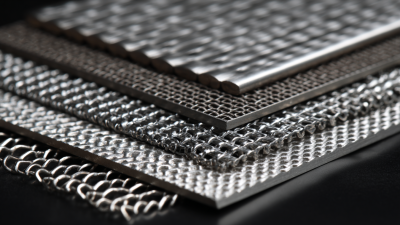
Choosing the best woven stainless steel mesh in 2026 is not about selecting the finest opening or the highest grade. It is about matching the mesh to the work. A filter handling hot oil needs different properties from a screen facing salt spray, abrasive powder, or repeated washing. Plain weave remains practical for accurate filtration. Twill weave offers stronger construction and smaller openings. Dutch weave can provide exceptional particle retention, although cleaning it may require patience.

Material choice matters just as much. Type 304 stainless steel suits many indoor and general industrial applications. Type 316 or 316L is often safer around chlorides, coastal air, and chemical exposure. However, “corrosion resistant” does not mean corrosion proof. That distinction is easy to miss. Dr. Joseph R. Davis, a recognized stainless-steel materials authority, writes, “Stainless steels are iron-base alloys containing a minimum of about 11% chromium.” This chromium content supports passivation, but mesh performance also depends on wire diameter, weave stability, surface contamination, temperature, and maintenance.

A reliable 2026 selection should examine aperture tolerance, tensile strength, edge finish, and traceable material certification. Ask for test data, not attractive claims. A cheaper mesh may look identical on a sample board, then deform under pressure or clog unexpectedly. The “best” woven stainless steel mesh is therefore application-specific. That answer feels less dramatic, but it is more honest. Real operating conditions should decide the specification.
What Is the Best Woven Stainless Steel Mesh Type in 2026?

Understanding Woven Stainless Steel Mesh and Its Main Types

What Is the Best Woven Stainless Steel Mesh Type in 2026?

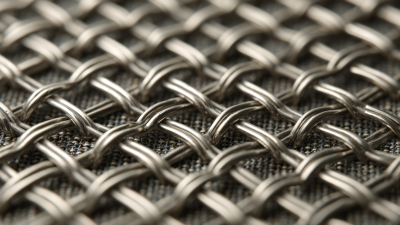
Woven stainless steel mesh uses interlaced wires to control particles, airflow, liquids, or heat. Its main types are plain weave, twill weave, Dutch weave, and reverse Dutch weave. Plain weave crosses each wire over and under the next wire. It offers balanced strength, open area, and easy cleaning. For general screening, it remains the safest choice.

Twill weave places each wire over two, then under two wires. This structure supports finer openings and stronger filtration. Dutch weave uses thicker warp wires and tightly packed weft wires. It suits precision filtration, especially when particle retention matters more than flow rate. Reverse Dutch weave improves pressure resistance in demanding filter systems. The choice is not always clean-cut.

The 2024 World Stainless report recorded about 58.4 million tonnes of crude stainless steel production in 2023. Fortune Business Insights valued the global stainless steel market at approximately US$207.6 billion that year. These figures show strong material availability, but they do not identify the best mesh automatically. In practice, wire diameter, aperture size, load, temperature, and cleaning method decide performance. A finer mesh may capture more particles, yet it can clog faster. That weakness is easy to overlook. For most 2026 applications, plain weave offers the best versatility, while Dutch weave is better for controlled, high-precision filtration. Engineers should verify the actual opening with microscopy or calibrated measurement, because nominal mesh counts can hide manufacturing variation.

Comparing Stainless Steel Mesh Weave Patterns and Performance

What Is the Best Woven Stainless Steel Mesh Type in 2026?

Choosing the best woven stainless steel mesh depends on aperture, wire diameter, pressure, and cleaning conditions. Plain weave remains the practical baseline. Each wire passes over and under the next wire, creating stable openings and predictable airflow. It suits screening, guards, and general separation. ISO 9044:2016 specifies requirements for industrial woven wire cloth, including aperture size, wire diameter, and inspection methods. These details matter more than appearance.

Twill weave places each wire over two and under two wires. It creates a tighter structure and supports heavier wire in fine filtration. Dutch weave uses different wire directions and smaller openings, improving particle retention under pressure. Its surface can look dense, almost fabric-like.

The filtration industry often accepts lower open area for better capture efficiency. That trade-off can increase pressure drop and complicate cleaning.

The International Stainless Steel Forum reported about 58.4 million tonnes of stainless crude steel production in 2023. This scale supports continued material availability, but it does not identify one superior mesh pattern. ASTM E2016 also emphasizes consistent terminology for mesh and wire cloth. In field testing, a plain weave may outperform a Dutch weave when rapid flow and easy washing matter. That shortcut can fail. Final selection should compare measured aperture tolerance, tensile strength, pressure loss, and corrosion exposure using the actual service fluid.

Matching Mesh Type to Filtration, Screening, and Industrial Uses

What Is the Best Woven Stainless Steel Mesh Type in 2026?
Matching Mesh Type to Filtration, Screening, and Industrial Uses

Choosing the best woven stainless steel mesh starts with the material being controlled. Plain weave mesh suits general filtration, where balanced openings and steady flow matter. It is practical for liquid filters, air screens, and small particle separation. The wires cross over and under each other. Simple, but dependable.

For finer filtration, Dutch weave mesh can provide stronger support and tighter openings. Its dense structure handles pressure better than many standard plain weaves. I have seen this type perform well in hydraulic systems and process equipment. It may reduce flow, though. That trade-off is easy to overlook.

Twill weave offers useful strength when the mesh must hold smaller particles. It works in demanding filtration and selected industrial screening applications. Square openings are often better for sizing and separating larger materials. Heavy-duty screens may need thicker wire and a reinforced edge. Do not choose by mesh count alone. Wire diameter, opening size, flow rate, temperature, and corrosion exposure all influence service life. Stainless steel resists moisture and heat, but it is not immune to chemical attack. In practice, calculations help, yet a small test sample can reveal problems faster.

What Is the Best Woven Stainless Steel Mesh Type in 2026? - Matching Mesh Type to Filtration, Screening, and Industrial Uses

Mesh Type Typical Opening / Filtration Range Flow Capacity Pressure Resistance Best-Fit Applications Key Advantages Main Limitation Recommended Stainless Steel
Plain Weave Approximately 20–2,000 µm openings; commonly available from about 1 to 635 mesh High for open screening grades Low to moderate, depending on wire diameter Particle sizing, safety guards, sieves, air screens, aggregate screening, and general separation Simple structure, consistent square openings, easy cleaning, and broad availability Less resistant to deformation than twill or Dutch weaves at very fine sizes 304 for general service; 316L for chloride, marine, or chemical environments
Twill Weave Approximately 10–500 µm openings; often used in fine mesh ranges Moderate to high Higher than plain weave for comparable fine mesh sizes Fine powder classification, liquid filtration, polymer processing, and precision screening Can use heavier wire in fine mesh, improving strength and service life More difficult to clean than coarse plain weave; openings are not as visually direct 304 or 316L, selected according to corrosion exposure
Plain Dutch Weave Typically about 5–250 µm absolute or nominal filtration, depending on construction Lower than square-opening mesh High for fine filtration applications Hydraulic filtration, fuel filtration, polymer melt filtration, and high-pressure liquid systems Strong structure and good particle retention with fine filtration capability Lower permeability and higher pressure drop than square-opening mesh 316L is preferred for demanding chemical or wet-process conditions
Twill Dutch Weave Approximately 2–100 µm filtration range in fine, high-strength constructions Low to moderate Very high among woven mesh types High-pressure filtration, polymer and chemical processing, hydraulic systems, and fine catalyst recovery Supports fine filtration while retaining substantial mechanical strength Highest pressure drop risk; requires careful sizing and differential-pressure control 316L is commonly selected for corrosive or high-purity service
Reverse Dutch Weave Approximately 10–300 µm filtration range, with filtration rating determined by wire arrangement Moderate High, especially in continuous filtration equipment Extrusion screen packs, candle filters, belt filters, and applications involving high contaminant loading Good dirt-holding capacity and resistance to wire displacement Filtration rating is less intuitive than mesh count and must be specified by opening or test method 304 for general processing; 316L for aggressive media
Square Welded-and-Woven Style Screening Mesh Commonly about 1–25 mm openings for coarse screening and guarding Very high Moderate to high, depending on wire diameter and support Machine guards, ventilation panels, bins, cages, grilles, and coarse material screening Rigid, open, and suitable for high-throughput screening and physical protection Not suitable for fine filtration; welded joints may be less appropriate for severe cyclic forming 304 or 316 stainless steel, depending on the environment
Perforated-Support Laminate with Fine Woven Layer Fine filtration commonly from about 5–100 µm, supported by a thicker backing layer Moderate Very high due to the supporting structure High-pressure hydraulic filters, process filters, backwash systems, and reusable filter elements Excellent dimensional stability, cleanability, and resistance to collapse Higher cost, greater thickness, and lower flexibility than single-layer woven mesh 316L is preferred where corrosion resistance and repeated cleaning are important
Expanded-Metal-Like Decorative or Airflow Mesh Typically about 2–20 mm openings; not normally specified by filtration micron rating High Moderate Architectural panels, acoustic covers, ventilation screens, equipment enclosures, and airflow management Lightweight, visually uniform, and offers useful open-area performance Not a substitute for precision woven filtration mesh 304 for indoor and general applications; 316L for outdoor coastal exposure
Selection note: Filtration values are indicative ranges rather than universal ratings. Actual performance depends on wire diameter, aperture distribution, fluid viscosity, pressure differential, contaminant shape, and the selected filtration test method. For corrosive service, 316L generally provides better resistance to chlorides and many chemical environments than 304 stainless steel.

Evaluating Wire Diameter, Opening Size, Grade, and Durability

The best woven stainless steel mesh in 2026 depends on the working environment, not marketing language. Wire diameter controls strength, flexibility, and open-area percentage. A thicker wire survives vibration and abrasion better, but it reduces airflow and filtration capacity. Opening size must match the target particle range, with ISO 9044:2016 providing recognized requirements for industrial woven wire cloth.

Grade selection is equally practical. Type 304 stainless steel suits dry indoor service and many general screening tasks. Type 316 stainless steel adds molybdenum, improving resistance to chloride exposure near coastal air or process washdown. World Stainless reported approximately 58.4 million tonnes of crude stainless steel production in 2023, showing the material’s broad industrial role, but production volume does not guarantee correct mesh selection.

Plain weave is a reliable starting point for moderate openings. Twill weave can create finer openings with stronger wire support. Dutch weave deserves attention in pressure filtration, where layered wire sizes improve particle retention. ISO 9044 testing includes aperture inspection and mechanical requirements. In practice, I would check a sample under load, not only inspect a specification sheet. A mesh that looks perfect may deform after repeated cleaning. That mistake is easy to make. Salt spray, temperature cycling, and tension should be tested before approving the final diameter, opening, and grade.

What Is the Best Woven Stainless Steel Mesh Type in 2026?

Typical 304, 316, 316L, and 430 stainless steel mesh configurations are compared by wire diameter, opening size, and calculated open area. The best choice depends on the required corrosion resistance, filtration precision, airflow, and mechanical durability.

The dimensions shown are representative metric configurations commonly used in woven wire mesh. Open area is calculated as [opening ÷ (opening + wire diameter)]² × 100. Grade 316 and 316L generally provide better chloride and marine corrosion resistance than 304, while 430 is a lower-cost ferritic option for less aggressive environments.

Selecting the Best Woven Stainless Steel Mesh Type in 2026

Selecting the Best Woven Stainless Steel Mesh Type in 2026 starts with the operating conditions, not the product name. Plain weave mesh suits general screening because its square openings are easy to inspect and clean. Twill weave offers better strength when finer wire must handle pressure or repeated vibration. Dutch weave is often preferred for precise filtration, especially when retaining very small particles matters.

Define the required aperture in microns, then check wire diameter and open area. It depends. A finer opening can improve filtration, but it may reduce flow and become harder to clean. For hot or corrosive environments, confirm the stainless steel grade, temperature range, and chemical exposure. Do not judge corrosion resistance from appearance alone. Request material certificates and verify the mesh count through inspection.

Practical selection also includes installation details. A sharp frame edge can damage fine mesh during tensioning. Uneven tension may create bulges, leakage paths, or premature fatigue. Measure twice. Test once. In one realistic evaluation, compare flow rate, particle retention, pressure drop, and cleaning time under matching conditions. Many buyers focus only on micron rating, which is an incomplete decision. Actual performance can change with fluid viscosity, particle shape, and operating pressure. A small pilot panel may cost more initially, yet it can reveal a poor fit before full production. Availability and traceability matter in 2026, but they should support engineering judgment, not replace it.