
What Are the 2026 Top Wire Cable Types for Global Buyers?

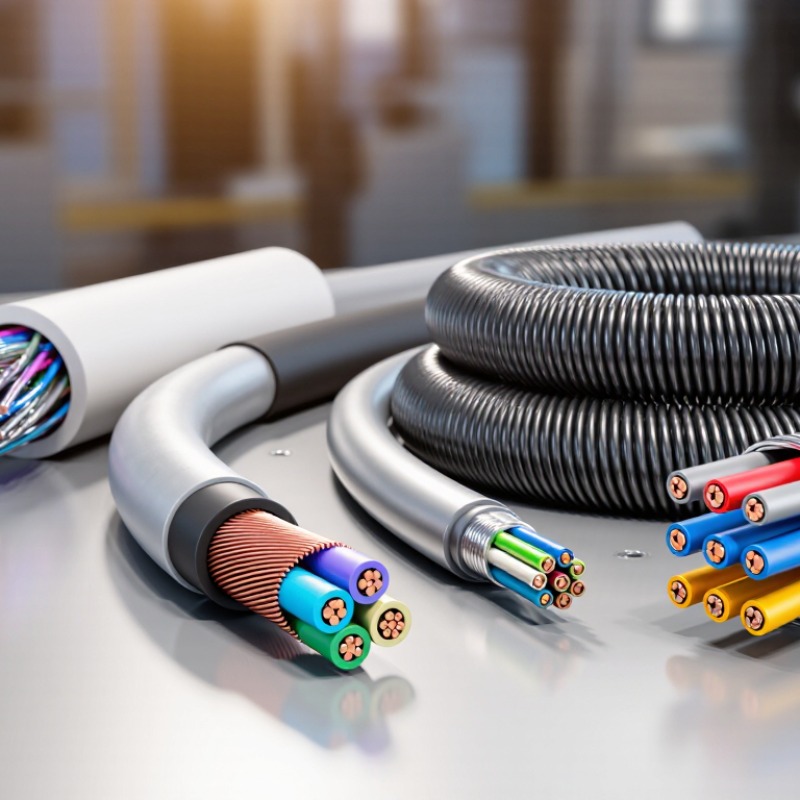
Global buyers entering 2026 face a crowded wire cable market. Copper conductors still support dependable power transmission. Aluminum designs offer lower weight and often reduce material costs. Fiber optic cable leads where high bandwidth and electromagnetic immunity matter. Shielded control cable remains essential near motors, drives, and industrial machinery.

The right choice is rarely based on price alone. Temperature, voltage, bending radius, fire performance, and installation location can change the decision. A cable exposed to oil needs different protection from one installed inside a dry data center. Outdoor projects may require ultraviolet resistance, water blocking, and stronger jackets. Procurement teams should also review conductor class, insulation material, testing records, and traceability.

John A. Roebling, a pioneer of wire-rope engineering, is widely associated with the statement, “The wire rope is the greatest invention since the steam engine.” His view reflects an important lesson: cable value depends on practical performance, not appearance. In 2026, buyers should compare verified specifications with real operating conditions. Certificates matter. So does factory experience.

No ranking is perfect.

This outline examines the leading wire cable types for global buyers, including copper, aluminum, coaxial, control, instrumentation, armored, and fiber optic designs. It considers performance, durability, compliance, supply reliability, and lifecycle cost. Some buyers may overvalue initial savings. Others may choose excessive protection without calculating installation difficulty. That is where careful evaluation becomes useful. The strongest purchase is not always the most advanced cable. It is the cable that remains safe, stable, and economical throughout its intended service life.
What Are the 2026 Top Wire Cable Types for Global Buyers?

2026 Global Cable Demand: 400G Networks, EVs, and Renewable Power

Global cable demand is being reshaped by 400G networks, electric vehicles, and renewable power. The Ethernet Alliance’s 2024 Ethernet Roadmap identifies 400GbE as a mainstream data-center speed, while 800GbE is moving into higher-density applications. These systems require low-loss single-mode fiber, high-density fiber trunks, and short-reach direct-attach or active copper cables. Installation teams should also check heat, bending radius, and connector cleanliness. Small details matter.

The International Energy Agency’s Global EV Outlook 2025 reported more than 17 million electric car sales in 2024. It expects global sales to exceed 20 million in 2025. This growth increases demand for flexible charging cables, liquid-cooled high-current cables, and durable control wiring. Outdoor charging sites need resistance to water, ultraviolet exposure, repeated bending, and temperature changes. A cable that works indoors may fail beside a busy highway.

Renewable power adds another pressure point. The IEA’s Renewables 2024 analysis projects almost 5,500 GW of global renewable capacity by 2030. Solar farms and wind projects therefore need medium-voltage XLPE cables, aluminum conductor cables, and fiber-optic monitoring lines. Subsea and underground routes require stronger mechanical protection. Forecasts still contain uncertainty. Grid delays, copper prices, and local standards can change the preferred cable type faster than expected.

Copper Power Cables: IEC 60228 Conductor Classes 1–6 and Voltage Ratings

Global buyers need to separate conductor construction from cable voltage. The IEA Electricity 2024 report forecasts global electricity demand to grow by an average 3.4% annually through 2026. That growth increases demand for reliable copper power cables in buildings, factories, grids, and renewable projects.

IEC 60228 defines conductor classes, not voltage ratings. Class 1 uses a solid copper conductor and suits fixed installations with limited movement. Class 2 uses stranded copper, offering easier installation and better resistance to vibration. Class 5 is flexible. Class 6 is even more flexible, useful near moving equipment and tight cable routes. Current purchasing specifications mainly use Classes 1, 2, 5, and 6. Classes 3 and 4 should not be assumed as active choices without checking the project standard. This detail is often missed.

Voltage selection follows the cable product standard. IEC 60502-1 commonly covers low-voltage cables rated up to 1 kV, such as 0.6/1 kV systems. IEC 60502-2 addresses medium-voltage designs, including common ratings from 6/10 kV to 18/30 kV. Higher-voltage projects may reference IEC 60840 or IEC 62067. The IEA report supports stronger grid investment, but demand alone does not choose the correct cable. Buyers should verify conductor class, insulation, installation temperature, short-circuit current, and local approval requirements. A cheaper flexible cable can be a poor fixed-installation choice. I would recheck every voltage notation before ordering.

This comparison uses common IEC-designated copper cable families. IEC 60228 defines conductor classes and electrical resistance requirements, while the cable product standard defines the voltage designation. Class 1 is solid, Class 2 is stranded for fixed installations, Class 5 is flexible, and Class 6 is extra-flexible. The voltage values are shown as U₀/U in kilovolts.

Fiber-Optic Cables: OS2, OM4, and 400G Data-Center Links

For global buyers, fiber-optic cable selection begins with distance, speed, and installation conditions. OS2 single-mode fiber suits long campus links, metropolitan networks, and carrier-grade routes. Its low attenuation supports extended distances with fewer active cabinets. In a warehouse or data center, OM4 multimode fiber can be more practical. It supports short, high-speed connections between racks and reduces transceiver complexity. The choice should follow the link budget, not a sales label.

400G data-center links demand tighter control. Parallel-fiber designs may use multiple lanes, while wavelength-based links can reduce fiber counts. Each option affects connector type, polarity, power consumption, and future upgrades. Clean end faces matter. A small particle can increase insertion loss and create unstable readings. Technicians should test every installed link with an optical loss test set and inspect connectors before mating. Records should include length, loss, polarity, and test equipment calibration dates.

I have seen projects specify OM4 everywhere, even when longer OS2 runs were needed. That shortcut created redesign costs. Another project selected 400G hardware before checking pathway space and bend limits. The equipment fit poorly. Better planning connects the cable type to rack layout, cooling, spare capacity, and maintenance access. However, standards and transceiver requirements can change during procurement. Buyers should verify current compatibility documents before final approval. A lower purchase price can hide higher deployment risk. Not every link needs maximum speed.

Structured Data Cables: Cat 6A at 500 MHz and IEEE 802.3 Standards

What Are the 2026 Top Wire Cable Types for Global Buyers?

Structured data cables remain central to reliable enterprise networks in 2026. Cat 6A supports frequencies up to 500 MHz. It also supports 10 Gb/s Ethernet over channels reaching 100 meters, when installation conditions are correct. IEEE 802.3 standards define Ethernet performance requirements, while cabling standards guide construction, testing, and channel design. Buyers should check both areas before choosing a cable.

In practical installations, Cat 6A needs careful handling. A tight bend can damage its internal geometry. Excessive untwisting may increase signal loss and alien crosstalk. I have seen installations fail because technicians ignored separation from power cables. Shielded designs can help in electrically noisy areas, but their bonding and grounding must be planned properly. Unshielded designs may simplify installation and reduce weight.

Small details matter.

Look for solid copper conductors, verified conductor size, dependable insulation, and clear test documentation. Confirm the cable’s temperature rating, flame performance, jacket material, and connector compatibility for the destination market. A cable can meet a printed frequency claim yet perform poorly after careless termination. That remains an uncomfortable reality. Laboratory results do not always represent crowded trays, hot ceilings, or rushed field work.

Global buyers should request independent channel-test reports and installation guidance. They should also verify compliance with applicable regional safety and cabling requirements. The best selection is not always the thickest or most expensive cable. It is the cable that matches the network speed, pathway, environment, and installer’s actual capabilities.

Buyer Selection Matrix: Ampacity, Fire Ratings, Standards, and Supply Risk

For global buyers, the strongest 2026 cable shortlist includes PVC building wire, XLPE-insulated power cable, LSZH cable, and fire-resistant cable. Each serves a different risk profile. PVC is economical for ordinary indoor circuits. XLPE handles higher operating temperatures and heavier feeder loads. LSZH limits smoke and corrosive gases in crowded public spaces. Fire-resistant cable supports circuit integrity during emergencies, but usually costs more.

A practical selection matrix starts with ampacity. Compare conductor size, insulation temperature, ambient heat, grouping, installation method, and voltage drop. IEC 60364-5-52 and NFPA 70 provide widely used calculation frameworks. Do not copy a catalog current rating blindly. A cable rated at 90°C may still require derating inside a packed tray. That detail often changes the purchase decision.

Fire performance needs separate checks. IEC 60332 addresses flame propagation, while IEC 60331 evaluates circuit integrity during fire exposure. European projects may also require EN 50575 reaction-to-fire classification. IEA’s Electricity 2024 report expects global electricity demand to grow by about 3.4% annually through 2026, increasing pressure on reliable cable supply. USGS Mineral Commodity Summaries 2025 estimates global mined copper production near 22 million metric tons in 2024. Copper availability remains exposed to mine disruptions, refining limits, and freight delays. The matrix is useful, but imperfect. Buyers should request recent test reports, origin records, alternative conductor options, and realistic lead times before approving a substitute.

What Are the 2026 Top Wire Cable Types for Global Buyers? — Buyer Selection Matrix

Comparative guide covering ampacity, fire performance, international standards, application fit, and indicative supply risk.

Cable Type Typical Voltage Class Common Conductor Options Indicative Ampacity Temperature Rating Fire and Smoke Performance Relevant Standards Best-Fit Applications Supply Risk for Global Buyers Buyer Selection Priority
PVC-Insulated Building Wire 450/750 V or 600 V Copper or aluminium; solid or stranded Approx. 95–125 A for a representative 25 mm² copper conductor under typical 70°C installation conditions Typically 70°C continuous Standard PVC is generally flame-retardant only when tested to the specified construction standard; smoke and corrosive-gas performance is not inherently low IEC 60227; IEC 60332-1-2; national building-wire codes Residential, commercial, and light industrial fixed wiring Low
Widely produced with common raw materials
Cost, availability, and general-purpose installation
Thermoplastic Nylon-Jacketed Building Wire 600 V Stranded copper; PVC insulation with nylon jacket Approx. 110–125 A for a representative 25 mm² copper conductor; final value depends on the applicable code and installation method 90°C conductor rating for ampacity adjustment; termination limits may be lower Typically passes vertical flame requirements applicable to the construction; not automatically low-smoke or halogen-free UL 83; UL 1685; NEC requirements where applicable Dry and damp building wiring, conduit, panels, and equipment feeders Low
Standardized construction and broad production base
Fast procurement and compatibility with North American installations
Cross-Linked Polyethylene Building Wire 600 V or 1 kV Copper or aluminium; single-core or multicore Approx. 115–145 A for a representative 25 mm² copper conductor, depending on installation arrangement 90°C continuous; commonly 130°C overload and 250°C short-circuit limits where permitted Can meet flame-retardant requirements; smoke and halogen performance depends on the jacket and compound IEC 60502-1; IEC 60332 series; UL 44 for applicable constructions Industrial distribution, renewable-energy balance-of-system wiring, and outdoor feeders Low
Common insulation system with multiple regional sources
Higher thermal capacity and improved moisture resistance
Low-Smoke Zero-Halogen Cable 450/750 V, 0.6/1 kV, or 1 kV Copper or aluminium; thermoset or thermoplastic LSZH compounds Approx. 105–140 A for a representative 25 mm² copper conductor; derating is required in grouped installations Typically 70°C or 90°C, depending on insulation system Designed for reduced smoke and corrosive gas; common tests include IEC 60754 and IEC 61034, plus flame tests under IEC 60332 IEC 60502-1; IEC 60332; IEC 60754; IEC 61034 Transit systems, hospitals, tunnels, airports, data facilities, and occupied public buildings Medium
Compound qualification and testing capacity can narrow the supplier pool
Life safety, evacuation visibility, and reduced corrosive damage
Fire-Resistant Circuit-Integrity Cable 0.6/1 kV or 1 kV Copper conductor with mica-based or equivalent fire-resistant insulation system Approx. 100–135 A for a representative 25 mm² copper conductor; installation configuration is critical Typically 90°C continuous, with a specified survival period under fire exposure Maintains circuit integrity for a defined duration, such as 30, 60, 90, or 120 minutes, only when the complete tested cable and support system are used IEC 60331; EN 50200 for applicable small cables; national fire-installation requirements Emergency lighting, fire pumps, alarms, smoke extraction, and life-safety systems Medium
Specialized materials and certification reduce interchangeable sources
Documented fire survival time and system-level certification
Steel-Wire-Armoured Power Cable 0.6/1 kV Copper or aluminium; PVC, XLPE, or LSZH insulation and sheath Approx. 105–150 A for a representative 25 mm² copper conductor; armour, grouping, burial depth, and soil thermal resistivity affect the result 70°C PVC or 90°C XLPE, depending on construction Flame performance depends on the sheath and cable design; armour provides mechanical protection but is not itself a fire rating IEC 60502-1; IEC 60332; IEC 60754 where LSZH construction is specified Industrial plants, buried feeders, infrastructure, and outdoor distribution Low
Common design with broad regional manufacturing capacity
Mechanical protection, outdoor durability, and installation security
Medium-Voltage XLPE Cable 3.6/6 kV to 18/30 kV Copper or aluminium; screened single-core or three-core construction Approx. 145–210 A for a representative 35 mm² copper single-core cable in air; spacing, screen losses, and installation method are decisive 90°C continuous; commonly 250°C short-circuit conductor limit Flame performance is construction-specific; low-smoke or fire-retardant sheaths can be selected for special locations IEC 60502-2; IEC 60840 for higher voltage ranges; IEC 60228 Utility distribution, industrial substations, wind and solar collector systems Medium
Longer qualification cycles and limited high-voltage testing capacity
Electrical stress control, partial-discharge performance, and proven accessories
Bare or Covered Overhead Conductor Distribution and transmission voltage ranges Aluminium, aluminium alloy, or aluminium-steel composite conductors Approx. 150–300 A for common distribution cross-sections; depends strongly on conductor size, wind, solar heating, and allowable temperature Common designs around 75–90°C; special high-temperature conductors may operate higher No conventional insulation fire rating; external exposure, clearance, and vegetation risk must be assessed IEC 61089; ASTM B232 or equivalent national conductor standards Overhead utility lines, rural electrification, and grid expansion Low
Commodity-like materials, but aluminium and steel price volatility remains relevant
Low installed cost, long span capability, and grid availability
Mineral-Insulated Metal-Sheathed Cable 500 V or 750 V, depending on construction Copper conductor, mineral insulation, and copper or corrosion-resistant metal sheath Approx. 100–160 A for representative conductor sizes; installation temperature and sheath arrangement affect ampacity High-temperature capability; the cable system may withstand several hundred degrees Celsius, subject to the certified design Very high fire resistance and circuit integrity when correctly installed; mineral insulation is non-combustible IEC 60702-1; IEC 60331 where fire survival testing is specified Fire pumps, emergency systems, high-temperature areas, and critical infrastructure High
Specialized production, termination skills, and fewer qualified sources
Maximum fire endurance and compact routing in critical circuits
Technical note: Ampacity figures are indicative comparison ranges rather than design values. Actual allowable current must be calculated using the applicable national code, conductor cross-section, conductor material, ambient temperature, installation method, number of loaded conductors, grouping, soil conditions, voltage drop, and termination rating. Fire performance applies only to the tested cable construction and, where relevant, its complete installation support system.