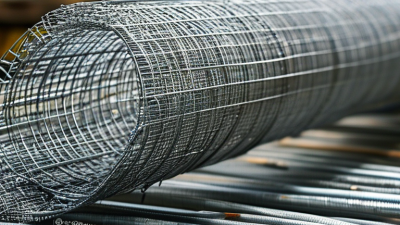

Top Woven Steel Mesh Manufacturers for Global Buyers

Global buyers are rethinking how they source woven steel mesh. The decision now reaches beyond price, availability, and attractive product photographs. It includes wire grade, aperture accuracy, tensile strength, surface finish, traceability, and packaging performance.

The World Steel Association’s April 2025 Short Range Outlook projected global steel demand at approximately 1.75 billion metric tons in 2025. The OECD Steel Committee also warned about growing worldwide excess capacity. These figures matter because unstable steel markets can affect mesh pricing, lead times, and supplier consistency. However, broad steel data cannot measure every mesh detail. Tonnage does not guarantee a reliable product.

As Edwin Basson, Director General of the World Steel Association, has stated, “Steel is essential for modern life.” That principle applies directly to woven steel mesh used in filtration, construction, mining, agriculture, and industrial screening. Strong applications still require precise weaving.

A dependable manufacturer should provide mill certificates, dimensional tolerances, test reports, and clear explanations of edge construction. Buyers should inspect sample panels under practical conditions. Check the aperture with calipers. Examine welds, crimps, and corrosion protection. Small deviations can become expensive failures.

This guide evaluates leading woven steel mesh manufacturers for global buyers. It considers production capability, material control, customization, export experience, and after-sales responsiveness. Some supplier claims remain difficult to verify publicly. That weakness deserves attention. Independent testing and careful supplier audits remain necessary, even when a catalog looks convincing.
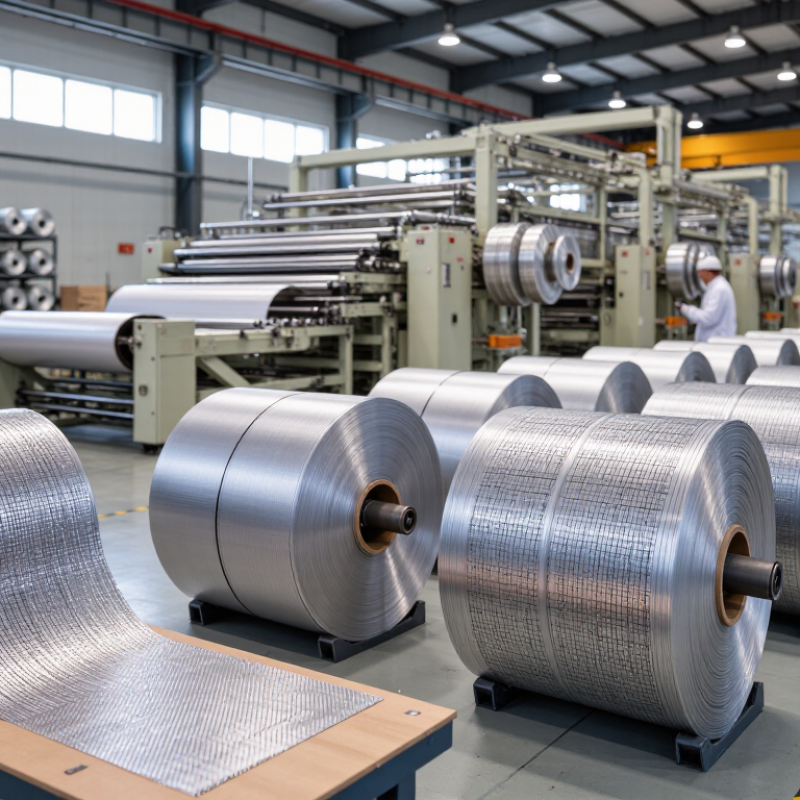
Top Woven Steel Mesh Manufacturers for Global Buyers

What Woven Steel Mesh Is and How It Is Manufactured

Top Woven Steel Mesh Manufacturers for Global Buyers

Woven steel mesh is made by interlacing metal wires in a controlled pattern. Like fabric, it uses crossing wires, but steel adds strength, heat resistance, and dimensional stability. Common patterns include plain weave, twill weave, and Dutch weave. Each pattern changes the opening size, filtration accuracy, and load capacity.

Manufacturing begins with wire selection. Producers check the steel grade, diameter, tensile strength, and surface condition. The wires then pass through calibrated weaving looms. Tension must remain consistent. A small variation can affect the final aperture. After weaving, technicians inspect the mesh for broken wires, uneven edges, and incorrect openings. Some applications require cutting, rolling, welding, or surface treatment. These steps improve handling, but they can also introduce distortion if poorly controlled. Perfect results are difficult. Experienced inspection still matters.

Tips: Ask for material certificates, aperture tolerances, and sample pieces before placing a large order. Confirm whether measurements describe the wire opening or the complete mesh panel. Request photographs of packaging and edge protection. Moisture during shipping can cause staining, even when the mesh was packed carefully. Buyers should also discuss testing standards, because “stainless” or “high strength” can mean different things across markets. A reliable manufacturer explains these details clearly and admits practical limits. That honesty is useful.

Key Types of Woven Steel Mesh for Industrial Applications

Industrial buyers rarely need “strong mesh” alone. They need a controlled balance between opening size, wire diameter, flow, and wear. Plain weave is the common starting point. Each wire passes over and under the next wire. It offers accurate openings and a smooth surface for screening powders, granules, and liquids. It is simple to inspect. That matters.

Twill weave uses a staggered pattern, allowing thicker wires in many specifications. Its diagonal surface improves flexibility and can provide higher load capacity than plain weave. It suits mineral processing, heat treatment baskets, and heavier screening duties. Dutch weave is different. It uses finer wires and a tighter structure. The filter side may use a plain or twill arrangement. This design supports pressure filtration, hydraulic systems, and fine particle separation. Flow can be lower, though. Engineers should verify pressure drop before ordering.

Crimped woven mesh uses pre-shaped wires to hold stable openings. It is useful for vibrating screens, guards, partitions, and aggregate handling. Stainless steel resists corrosion, while galvanized or carbon steel can fit less aggressive environments. Material selection still depends on temperature, chemicals, cleaning cycles, and abrasion. Request test data, aperture tolerance, tensile strength, and edge details. A small mistake can become costly. Some specifications look complete but omit wire tolerance. Recheck the drawing against actual operating conditions, not only the catalog description.

How to Assess Woven Steel Mesh Manufacturers

Top Woven Steel Mesh Manufacturers for Global Buyers

How to Assess Woven Steel Mesh Manufacturers

A reliable assessment starts with evidence, not polished product photos. Request samples with the exact wire diameter, mesh opening, and material grade required. Measure the openings with calipers and inspect every edge for loose wires. Small variations can affect filtration, airflow, and assembly. Ask how the manufacturer controls these measurements during production. Factory experience matters here.

Review test reports for tensile strength, corrosion resistance, and dimensional accuracy. The reports should identify test methods, sample numbers, and testing dates. Traceability is equally important. Each shipment should connect to a production batch, inspection record, and material certificate. A clear quality system may include documented procedures and independent audits. Do not accept vague claims.

Visit the facility when practical, or request a live production video. Observe wire storage, loom maintenance, cleaning areas, and final inspection. Ask how rejected rolls are separated from approved stock. Packaging also deserves attention; wrapped edges and moisture barriers can prevent damage during long transport. I have seen attractive samples followed by inconsistent bulk orders. That risk deserves direct questions.

Compare lead times with realistic production capacity, not promises alone. Request a pilot order before committing to large volumes. Check communication during technical discussions, especially when specifications change. A dependable manufacturer explains limitations clearly, even when the answer is inconvenient. That honesty is often more valuable than a low quotation.

Top Woven Steel Mesh Manufacturers for Global Buyers - How to Assess Woven Steel Mesh Manufacturers

Assessment Dimension What to Check Relevant Technical Data Reliable Evidence Buyer Evaluation Guidance
Material Grade Confirm that the wire material matches the service environment and required mechanical performance. Common options include low-carbon steel, galvanized steel, stainless steel, and high-carbon steel. Stainless steel grades such as 304 and 316 are widely used for corrosion-resistant applications. Material test certificate, chemical composition report, and traceable heat or batch number. Reject quotations that list only “steel” without a defined grade, coating, or applicable standard.
Wire Diameter Check whether the wire diameter is suitable for load, aperture size, forming method, and installation conditions. Commercial woven wire mesh commonly uses wire diameters from approximately 0.05 mm to 6 mm, depending on mesh type and application. Calibrated micrometer measurements, inspection records, and a dimensional tolerance specification. Require diameter tolerances to be stated before sampling and repeated during final inspection.
Mesh Opening Verify the clear opening and opening uniformity across the roll or cut panel. Opening sizes vary from very fine filtration mesh to large architectural or screening apertures. Mesh count may be expressed as openings per linear inch, while coarse mesh is often specified by opening in millimetres. Optical measurement, calibrated mesh gauge, inspection report, and approved sample. Specify opening size, wire diameter, tolerance, and measurement method together; mesh count alone can be ambiguous.
Weave Pattern Determine whether the weave provides the required strength, flexibility, filtration accuracy, or surface finish. Plain weave is common for general screening and filtration; twill weave supports finer or heavier wires; Dutch weaves are used for controlled filtration; crimped mesh is common for structural screening. Technical drawing, weave diagram, sample approval, and production inspection records. The manufacturer should explain how the selected weave affects tensile strength, permeability, and dimensional stability.
Surface Protection Assess corrosion protection before and after weaving, especially for outdoor or humid service. Typical finishes include untreated metal, electro-galvanized wire, hot-dip galvanized wire, PVC-coated wire, and stainless steel. Zinc coating mass or thickness should be specified where applicable. Coating test report, salt-spray or corrosion test where relevant, and visual inspection for bare areas or flaking. Do not compare galvanized products by appearance alone; request the coating type and measured coating value.
Dimensional Accuracy Check roll width, panel length, squareness, flatness, and edge condition. Required dimensions should include nominal size, allowable tolerance, edge treatment, and roll or panel configuration. Factory inspection plan, dimensional checklist, photographs, and independent pre-shipment inspection. A capable supplier can provide consistent dimensions across multiple production lots, not only one approved sample.
Mechanical Performance Match tensile strength, load capacity, and flexibility to the intended use. Relevant values may include wire tensile strength, elongation, weld or joint integrity where applicable, and panel load performance. Mill certificate, tensile test results, application-specific test report, and third-party laboratory data. Ask for results from the actual material and production batch rather than generic catalogue values.
Manufacturing Capability Evaluate whether the production line can handle the required mesh type, width, quantity, and repeat orders. Review available weaving equipment, maximum machine width, minimum opening, maximum wire diameter, cut-panel capability, and finishing processes. Factory audit, equipment list, production photographs or video, capacity statement, and sample lead-time record. Prioritize documented process capability over stated annual capacity.
Quality Management Confirm that quality checks are systematic and traceable. A robust system covers incoming wire inspection, in-process mesh checks, final dimensional inspection, nonconformance handling, and record retention. Quality manual, inspection and test plan, corrective-action records, and valid management-system certification where required. Verify certificate scope, issuing body, validity, and whether it covers the actual manufacturing site.
Standards and Compliance Identify the standards required by the destination market and end-use sector. Potential references include ASTM, ISO, EN, DIN, or project-specific specifications. The applicable standard depends on material, mesh type, and application. Declaration of conformity, test reports, standard-specific inspection records, and technical data sheet. Never treat an ISO 9001 certificate as proof that the product meets every technical standard.
Packaging and Logistics Ensure the packaging protects mesh from deformation, moisture, contamination, and handling damage. Review roll diameter, core type, pallet or crate requirements, moisture protection, gross weight, and shipping marks. Packaging specification, packing photographs, carton or roll markings, and export documentation sample. Request packaging approval before mass production, particularly for long-distance ocean transport.
Commercial Reliability Compare quotation clarity, sample response, production lead time, payment terms, and after-sales support. A complete quotation states material grade, wire diameter, opening, weave, finish, dimensions, tolerance, quantity, packing, Incoterm, and delivery time. Signed quotation, approved specification, purchase contract, production schedule, and documented complaint procedure. Select the supplier offering the clearest technical commitment, not simply the lowest initial price.
Recommended Buyer Process: Issue one consistent technical specification, compare like-for-like quotations, approve a physical sample, verify batch documentation, and arrange pre-shipment inspection for the first production order.

Global Quality Standards, Certifications, and Testing Practices

Top Woven Steel Mesh Manufacturers for Global Buyers

Reliable woven steel mesh manufacturers work against recognized standards, not vague quality claims. Buyers should check ISO 9001 certification, applicable ASTM, EN, or JIS requirements, and the certificate’s current scope. The document should match the actual factory and product range. A certificate alone is not proof.

Professional testing normally covers wire diameter, aperture size, mesh count, tensile strength, surface condition, and corrosion resistance. For stainless steel mesh, material analysis can confirm alloy composition. An ISO/IEC 17025 accredited laboratory adds stronger evidence. Factory inspectors may also review calibration records, sampling methods, and batch traceability. Each roll should connect to production records, inspection results, and packing details. Small gaps matter.

Tips: Request a recent test report, not a template. Compare measured aperture sizes with drawing tolerances. Ask whether testing covers the delivered batch. Inspect random roll samples before shipment. Photograph labels, edges, and protective packaging. Standards can differ by market, so confirm the buyer’s technical specification early. Even experienced buyers sometimes overlook wire hardness or roll tension. That mistake can affect installation. Recheck everything.

Ordering, Customization, Pricing, and International Shipping Factors

Top Woven Steel Mesh Manufacturers for Global Buyers

Ordering woven steel mesh requires more than comparing catalog prices. Confirm the wire material, weave pattern, opening size, wire diameter, roll width, and tolerance range. Request a technical drawing when dimensions are critical. A small opening error can affect filtration, airflow, or assembly performance.

Ask manufacturers for recent inspection records, material certificates, and sample pieces before placing a large order. I once approved a mesh from a photograph and missed a noticeable difference in surface finish. That mistake increased installation time. Physical samples reveal stiffness, edge quality, flatness, and protective packaging more clearly. Keep specifications in one signed document. Emails alone can create confusion.

Customization usually changes both price and lead time. Special widths, welded edges, cut panels, or corrosion-resistant alloys may require dedicated production settings. Request separate prices for mesh, tooling, inspection, packing, and inland delivery. The lowest quotation may exclude export packaging or port charges. Check the quotation validity period, payment schedule, production timeline, and replacement terms for defects.

International shipping needs practical planning. Confirm the shipment’s net weight, gross weight, carton dimensions, loading method, and destination port. Rolls need strong cores and moisture-resistant wrapping, especially during sea transport. Ask for the appropriate trade term and verify which party handles customs documents, insurance, and local delivery. Transit estimates can change with port congestion. Build a reasonable buffer. Supplier communication may still be imperfect, so confirm every revision in writing.

Top Woven Steel Mesh Manufacturers for Global Buyers

Ordering, customization, pricing, and international shipping decisions often begin with material selection. The chart compares nominal chromium and nickel composition ranges for commonly specified stainless-steel mesh grades, based on standard commercial alloy specifications.

Higher alloy content can support corrosion resistance but may increase material cost. Final pricing and shipping requirements also depend on wire diameter, mesh count, roll or cut-sheet format, order quantity, packaging, and delivery terms.