Top 5 Gate Valve Types Explained for Beginners?
Gate Valves are essential components in various industrial applications. These valves control the flow of liquids and gases, ensuring efficient operations. According to a market study by ResearchAndMarkets, the global gate valve market is expected to reach $16 billion by 2025, indicating strong growth in industries relying on fluid control.
For beginners, understanding the different types of gate valves is crucial for making informed choices. The common types include parallel, wedge, and sliding gate valves, each serving unique functions. However, selecting the right type can be overwhelming. Factors such as pressure ratings and material compatibility must be considered.
Many inexperienced users overlook these details, leading to inefficiencies. Misapplication can result in costly repairs and downtime. Therefore, grasping the basics of gate valves is not just essential; it’s imperative for operational success. Approaching the selection process thoughtfully can make a significant difference in any project.
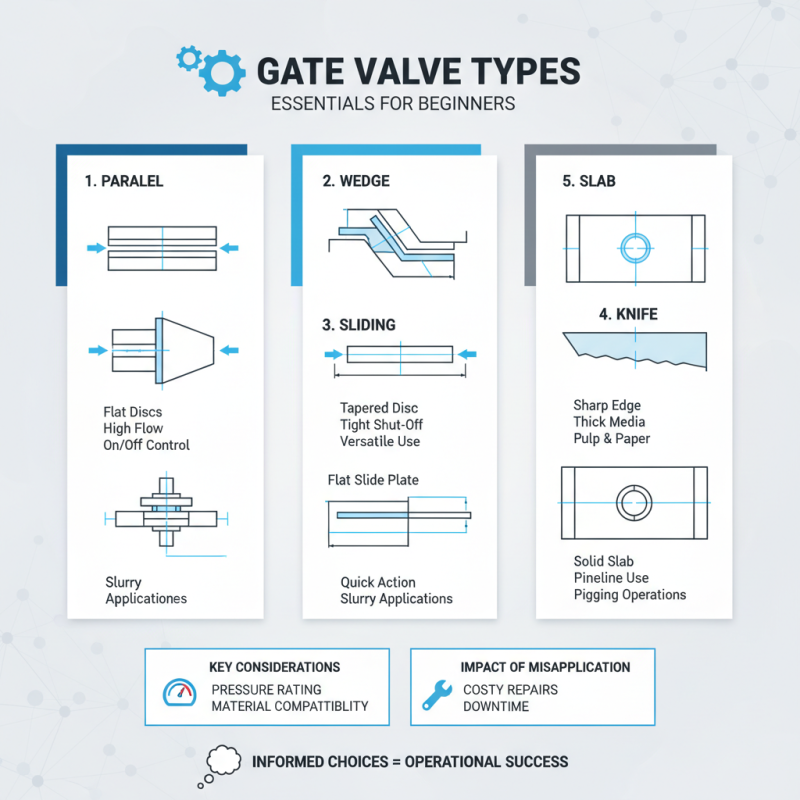
Understanding Gate Valves: An Introduction for Beginners
Gate valves play a crucial role in managing fluid flow in pipelines. For beginners, understanding these valves is essential for various applications. A gate valve functions primarily to start or stop the flow. Its design allows for minimal pressure loss. According to industry reports, gate valves account for around 30% of all valve usage in industrial settings. Different types exist, including Wedge Gate, Parallel Gate, and Expanding Gate valves. Each type has unique features suitable for specific applications.
When selecting a gate valve, consider the material and pressure rating. This choice impacts performance and longevity. Tips for beginners: always check compatibility with your fluid type. Additionally, remember that a well-maintained gate valve can last over 20 years. However, neglect can lead to leaks or valve failures. Regular inspections are crucial.
Another important aspect is installation. It should be aligned correctly to prevent unnecessary stress. Misalignment can cause premature wear. This caution is often overlooked, yet it’s vital for valve longevity. Ensure proper training for installation personnel to avoid common mistakes. Always prioritize safety and functionality when working with gate valves.
Top 5 Gate Valve Types Explained for Beginners
This chart illustrates the distribution of various types of gate valves based on their application in different industries. It's important for beginners to understand the features and uses of each type, as they cater to specific fluid control needs.
Types of Gate Valves: Overview of Different Designs
Gate valves are essential in various industries. They are designed to start or stop fluid flow. Understanding different designs is crucial for effective applications.
One common type is the wedge gate valve. This design features a wedge-shaped disc that creates a tight seal. Reports indicate that this valve type is widely used in water supply systems due to its reliability. The seal prevents leakage, ensuring safe operation. However, the wedge can wear out over time, leading to possible issues.
Another popular design is the parallel gate valve. This type uses two parallel discs that move in and out of alignment. This design minimizes friction and allows for smoother flow. According to recent industry analysis, parallel gate valves are gaining traction, especially in gas applications. Yet, they require regular maintenance. Over time, the discs may become misaligned, causing flow restrictions.
Understanding these variations aids in selecting the right type for specific needs. Each design comes with limitations. It's vital to weigh these factors for optimal performance.
Applications of Gate Valves in Various Industries
Gate valves play a crucial role in various industries. They are designed to start or stop fluid flow in pipelines. In the oil and gas industry, these valves help control the flow of crude oil and natural gas. Their reliability is essential in preventing leaks. However, sometimes they may not seal completely, leading to unintended leaks.
In water treatment facilities, gate valves manage the flow of treated and untreated water. Proper functioning of these valves is vital for safety. Yet, issues like corrosion can affect their efficiency over time. In power plants, gate valves are used in steam pipelines. They help direct steam to turbines, but maintenance is often overlooked.
Gate valves are also essential in manufacturing processes. They can help regulate the flow of chemicals. This application requires careful monitoring to avoid contamination. Each industry relies on gate valves in unique ways, highlighting their importance. But despite their significance, users must continuously evaluate their performance to ensure durability.
Key Features and Benefits of Each Gate Valve Type
Gate valves are essential in controlling fluid flow in various systems. Understanding their types can assist in making informed decisions. There are several types of gate valves, each with distinct features and benefits.
Wedge gate valves are popular due to their simple design. They offer excellent sealing capabilities and can withstand high pressures. Reports indicate that these valves can last over 20 years when maintained properly. Choose them for applications where space is limited and reliability is key.
Parallel gate valves provide a unique advantage. They can maintain flow even when partially open, reducing the risk of cavitation. This feature makes them suitable for handling viscous fluids. In tests, these valves showed lower pressure drops compared to wedge types. However, they may require more precise adjustments.
Here’s a tip: regular inspection can extend the life of your gate valves. Look for signs of wear and tear. Also, consider the environment where the valve is installed. Some conditions may accelerate degradation.
Another important aspect is to ensure proper installation. Even the best gate valve type can underperform if not installed correctly. Misalignment can lead to leaks. Always consult with professionals when in doubt about the installation process.
Factors to Consider When Choosing a Gate Valve
Choosing the right gate valve is crucial for efficiency and safety in various applications. When selecting a gate valve, consider several critical factors. Material choice is paramount. Common materials include stainless steel, brass, and PVC. Each material has distinct characteristics, affecting pressure and temperature tolerance. Stainless steel is preferable in corrosive environments, offering high strength and durability.
Another vital aspect is valve size. According to industry reports, incorrect sizing can lead to pressure drops and inefficiencies, impacting the entire system. Ensure the valve matches the pipe diameter and is suitable for flow conditions. The type of operation should also be examined. Manual, electric, and pneumatic actuators present varying degrees of control and ease of use.
Consider the pressure rating of the valve as well. A mismatch can cause catastrophic failures. The American Society of Mechanical Engineers (ASME) suggests checking the valve's pressure limits to ensure safe operations. Finally, evaluate the cost versus performance ratio. While cheaper options might attract attention, investing in quality can prevent long-term issues. Balancing these factors is essential for a sound decision.
Top 5 Gate Valve Types Explained for Beginners
| Gate Valve Type | Material | Common Uses | Advantages | Disadvantages |
| Wedge Gate Valve | Cast Iron, Stainless Steel | Water Supply, Oil Pipelines | Low pressure drop, Tight sealing | Not suitable for throttling |
| Parallel Gate Valve | Brass, Bronze | Heating Systems, Water Systems | Good for throttling, Less wear | Can leak if improperly installed |
| Rising Stem Gate Valve | Steel, Alloy | Chemical Processing, Water Treatment | Easy to inspect, Clear indication of valve position | Requires more space to operate |
| Non-Rising Stem Gate Valve | PVC, Steel | Wastewater Applications, Cooling Water | Space saving, Can be actuated | Harder to inspect |
| Electric Gate Valve | Stainless Steel, Bronze | Automated Systems, Fluid Control | Automation, Precise control | Dependency on power supply |