


10 Best Excavation Equipment Suppliers for Global Buyers

Choosing reliable suppliers matters when a crawler excavator must cut through hard clay, lift wet soil, or work beside a crowded road. The wrong machine can consume fuel quickly, delay a project, and leave operators waiting for parts. This guide introduces 10 Best Excavation Equipment Suppliers for Global Buyers, focusing on practical value rather than brand popularity alone.

The evaluation considers excavator performance, hydraulic efficiency, attachment compatibility, operator safety, service coverage, spare-parts access, warranty clarity, and total ownership cost. A machine that looks affordable may become expensive when filters, tracks, or hydraulic components are difficult to obtain. Regional dealer strength also matters. A strong supplier should provide training, maintenance guidance, and responsive technical support after delivery.

Jim Umpleby, former Caterpillar chairman and CEO, said, “Our customers are looking for solutions that help them improve their productivity, efficiency, safety and sustainability.” That principle applies directly to Excavation Equipment. Buyers need more than impressive horsepower. They need dependable machines that match soil conditions, transport limits, climate, and local skills.

This ranking is useful, but it is not perfect. Supplier performance can vary between countries, and published specifications do not always reflect field conditions. A 20-ton excavator may perform differently on rocky ground than on compact urban sites. Therefore, buyers should verify dealer references, service response times, certification requirements, and real operating costs before signing a contract. Field evidence remains essential. Brand reputation helps, but careful comparison protects the investment.
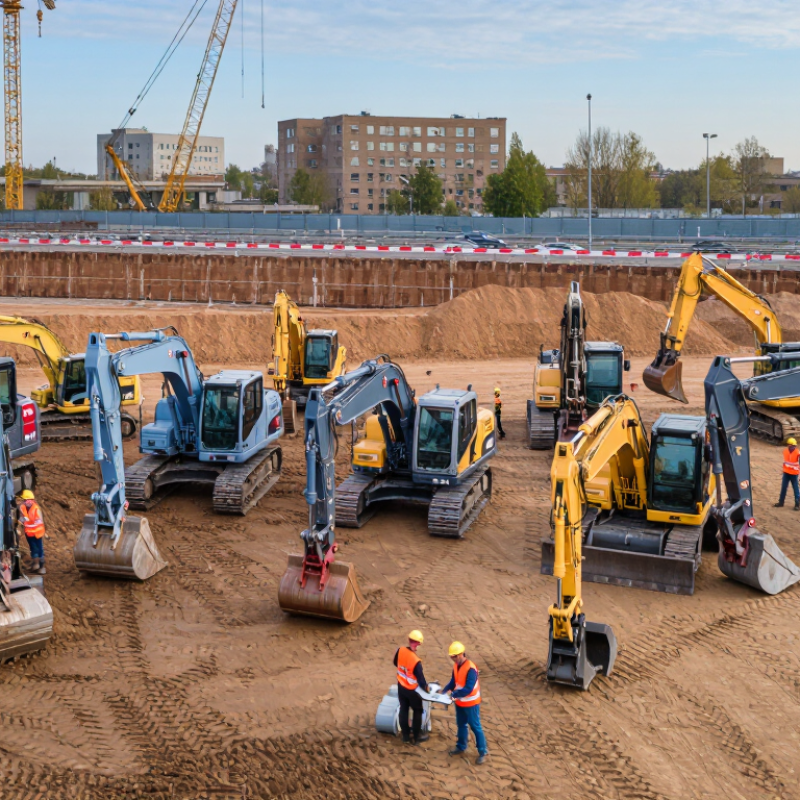
10 Best Excavation Equipment Suppliers for Global Buyers

Understanding the Global Excavation Equipment Supplier Market

10 Best Excavation Equipment Suppliers for Global Buyers

Understanding the Global Excavation Equipment Supplier Market

The global excavation equipment supplier market is shaped by infrastructure spending, mining activity, rental demand, and regional construction cycles. Buyers need more than machine specifications. They should examine operating hours, maintenance records, spare-part access, and delivery experience.

A supplier serving remote projects may offer stronger logistics support than a cheaper local seller. Port distance matters. So does technician availability. Field inspections often reveal worn hydraulic lines, uneven tracks, or inaccurate hour meters. These details can change the real purchase cost. Supplier expertise should include soil conditions, climate demands, fuel efficiency, and attachment compatibility.

Tips: Request service records. Check serial numbers. Ask for test videos under load. Compare warranty terms carefully. Speak with two previous customers.

Pricing is only one market signal. A low quotation may exclude customs preparation, operator training, or replacement filters. Established suppliers usually explain these costs clearly and provide documented inspection procedures. Still, even experienced sellers can overlook regional voltage, language, or terrain requirements. Buyers should challenge assumptions before signing.

A practical evaluation matrix can rank suppliers by equipment quality, response time, technical support, payment security, and delivery reliability. Independent inspection adds confidence, especially for used machinery. The market is competitive, but trust develops slowly. One missing document can become a costly delay.

10 Best Excavation Equipment Suppliers for Global Buyers

Understanding the Global Excavation Equipment Supplier Market

Asia-Pacific represents the largest share of global excavator demand, supported by infrastructure development, urban construction, mining, and expanding equipment rental markets. Europe and North America remain important mature markets, while Latin America and the Middle East & Africa show continued growth potential. The figures are rounded regional market-share estimates for 2024 based on publicly reported industry research.

Key Criteria for Evaluating International Equipment Suppliers

10 Best Excavation Equipment Suppliers for Global Buyers

International supplier evaluation should begin with uptime, not catalogue size. Ask for documented operating hours, failure rates, and average parts lead times. A reliable supplier should provide service coverage near your project, including trained technicians and hydraulic-system support. Request references from contractors working in similar soil, climate, and duty cycles. A machine used in frozen ground faces different risks from one working in humid clay.

Total cost matters more than purchase price. Compare fuel consumption, scheduled maintenance, attachment compatibility, resale assumptions, and operator training. McKinsey’s report, Reinventing Construction, estimated construction productivity grew only about 1% annually over two decades. Small efficiency losses become expensive across thousands of operating hours. UNEP’s 2023 Global Status Report for Buildings and Construction reported that the sector produced 37% of global energy-related emissions in 2022. Suppliers should therefore disclose fuel data, emissions testing, and practical idle-reduction results. No checklist is perfect. Field conditions can expose weaknesses that brochures hide.

Tips: Ask for a 30-day operating-cost estimate. Check parts availability in writing. Test telematics before signing. Inspect one working machine, not only a showroom unit. A low price can be an illusion. Also review warranty exclusions, delivery terms, local compliance documents, and technician response times. Leave room for uncertainty, because maintenance forecasts are never perfectly clean.

Ten Leading Excavation Equipment Suppliers for Global Buyers

For global buyers, choosing among ten leading excavation equipment suppliers requires more than comparing quoted prices. The 2024 KHL Yellow Table reported that the world’s 50 largest construction equipment manufacturers generated approximately US$243.4 billion in 2023 sales. This scale shows the market’s depth, but it does not guarantee reliable support. A strong supplier should provide verified production records, clear warranty terms, parts availability, and documented machine testing.

Field experience often reveals small details. A crawler excavator may appear efficient in a showroom, yet perform poorly on soft ground. Buyers should examine operating weight, hydraulic flow, fuel use, attachment compatibility, and transport dimensions. ISO-compliant documentation helps, but paperwork alone is not enough. Request videos of comparable projects, inspection reports, and customer references from similar climates. Some suppliers promise rapid delivery without explaining port delays or local service capacity. That deserves scrutiny.

Tips: Build a weighted scorecard before contacting suppliers. Give service response time, spare-parts coverage, total operating cost, and safety documentation higher scores than purchase price. Ask for a three-year cost estimate, including filters, tracks, shipping, training, and downtime. The World Bank’s logistics research repeatedly links unpredictable transport performance with higher business costs. I have seen buyers overlook this point. It is an expensive mistake. Also, leave room for uncertainty; quoted fuel savings may change with soil type, operator habits, and maintenance quality.

Comparing Product Range, Technology, Service, and Market Coverage

The ten best excavation equipment suppliers should be compared beyond catalogue size. Product range matters first: excavators, loaders, drilling units, attachments, compact machines, and replacement parts should cover different ground conditions. Grand View Research valued the global construction equipment market at about USD 232.4 billion in 2023. It also expects a 5.8% compound annual growth rate through 2030. This growth increases choice, but it can also hide uneven quality.

Technology separates strong suppliers from ordinary exporters. Look for fuel monitoring, remote diagnostics, machine-control systems, and low-emission power options. MarketsandMarkets estimates that the construction equipment market could reach about USD 250.4 billion by 2029. Its figures use a different market scope. That difference deserves attention. A supplier promising smart machinery should provide measurable uptime data, software training, cybersecurity procedures, and clear update policies. Digital features alone are not enough.

Service and market coverage often decide the real purchase cost. Check regional warehouses, technician response times, spare-parts availability, operator training, and warranty handling. A machine may perform well in a test yard but fail commercially without local support. Compare delivery records across ports, customs documentation, financing options, and climate-specific configurations. Avoid ranking suppliers only by price. That is the uncomfortable part. Some comparisons still rely on brochures instead of field evidence. Buyers should request customer references, independent inspection reports, and total-cost estimates for five years. The best supplier is rarely the cheapest one. It is the one that remains dependable after the sale.

Selecting the Right Supplier for Your Excavation Project

Choosing among the 10 best excavation equipment suppliers requires more than comparing machine prices. Grand View Research valued the global construction equipment market at approximately USD 232.6 billion in 2023. Demand is growing, but unsuitable equipment can still damage project margins.

Match the supplier to your ground conditions, fleet size, and working schedule. Ask for verified fuel-use data, digging-force charts, attachment compatibility, and delivery records. A compact excavator may suit a narrow urban site, while a larger crawler machine needs stronger transport planning. Parts availability matters. Request local stock levels and a written service response time. Small delays become expensive quickly.

McKinsey’s Reinventing Construction report found construction productivity growth remained close to 1% annually over two decades. Supplier support can influence that gap. Look for operator training, remote diagnostics, maintenance schedules, and clear warranty terms. Speak with recent customers, not only supplied references. Their feedback may reveal repeated hydraulic failures or slow claims handling.

A low quote can mislead. Calculate total ownership cost, including fuel, wear parts, transport, financing, and expected resale value. I would also test the machine before signing, even when specifications look impressive. Numbers are useful. Soil is less predictable. An experienced supplier should discuss those uncertainties openly, including what its equipment cannot do. That honesty is often more valuable than a polished sales presentation.

10 Best Excavation Equipment Suppliers for Global Buyers - Selecting the Right Supplier for Your Excavation Project

Rank Supplier Profile Primary Export Region Main Equipment Range Typical Operating Weight Typical Power Range Best Project Fit After-Sales Capability Key Selection Consideration
1 Global Full-Line Supplier Worldwide Mini, crawler, wheeled, and large excavators 1.5–90 tonnes 15–500 kW Large infrastructure, mining, and mixed fleets Regional dealers, parts warehouses, operator training Choose when consistent specifications and global parts access are priorities.
2 Compact Urban Specialist Europe and Asia-Pacific Zero-tail-swing mini excavators and compact loaders 1.0–8 tonnes 10–65 kW Road maintenance, utilities, landscaping, and city projects Attachment support, remote diagnostics, mobile service Evaluate tail-swing clearance, transport width, and hydraulic flow.
3 Heavy-Duty Earthmoving Supplier North America and Australia Heavy crawler excavators and material-handling units 25–100 tonnes 180–600 kW Quarries, bulk excavation, ports, and major civil works Component rebuilds, fleet monitoring, long-term service contracts Confirm ground-pressure limits, transport permits, and bucket availability.
4 Value-Oriented OEM Supplier East Asia, Africa, and Latin America Standard mini, medium, and crawler excavators 3–30 tonnes 25–180 kW General contractors seeking lower acquisition cost Remote technical support, spare-parts packages, dealer onboarding Compare warranty terms, component origins, and local technician training.
5 Rental-Fleet Specialist North America and Europe High-utilization compact and mid-size excavators 2–22 tonnes 18–140 kW Short-term projects and variable equipment demand Rapid replacement units, preventive maintenance, telematics Assess uptime history, rental-to-purchase options, and delivery speed.
6 Mining and Quarry Equipment Supplier Australia, Southern Africa, and South America Large excavators, rock buckets, and reinforced attachments 35–120 tonnes 250–700 kW Hard rock, overburden removal, and continuous production Field engineers, wear-part planning, rebuild programs Verify bucket abrasion ratings, cycle-time targets, and site support distance.
7 Specialty Foundation Equipment Supplier Europe and the Middle East Long-reach excavators, drilling bases, and diaphragm-wall equipment 12–80 tonnes 90–450 kW Deep excavation, piling support, canals, and waterfront works Application engineering, custom configuration, commissioning support Check maximum reach, attachment compatibility, and stability calculations.
8 Low-Emission Equipment Supplier Europe, Japan, and selected urban markets Battery-electric, hybrid, and low-emission excavators 1.5–25 tonnes 15–180 kW equivalent Indoor work, noise-controlled zones, and urban construction Battery service, charging guidance, software updates Review charging time, duty-cycle performance, battery warranty, and grid access.
9 Used and Refurbished Equipment Exporter Europe, North America, and East Asia Inspected used excavators and refurbished attachments 2–45 tonnes 20–300 kW Budget-sensitive contractors and supplemental fleets Inspection reports, export preparation, parts sourcing Require service records, hydraulic test results, hour-meter verification, and photos.
10 Attachment and Customization Specialist Worldwide through distributor networks Buckets, breakers, grapples, augers, and quick couplers Compatible with 1–80 tonne excavators Hydraulic flow dependent Demolition, material handling, trenching, and specialized excavation Fitment guidance, replacement wear parts, hydraulic setup support Match attachment weight, pin dimensions, hydraulic flow, and carrier lifting capacity.
Buyer Note: Supplier suitability should be verified against current quotations, local regulations, warranty terms, spare-parts availability, delivery time, machine specifications, and total cost of ownership.