
Top Steel Wire Mesh Manufacturers for Global Buyers

Choosing reliable steel wire mesh manufacturers requires more than comparing prices and catalog photographs. Global buyers must examine wire grade, aperture accuracy, weld strength, coating thickness, and production consistency. A mesh panel may look perfect under warehouse lighting, yet fail after repeated loading or exposure to coastal moisture.

Materials engineer Dr. George F. Dieter emphasized, “The best material is not necessarily the strongest one; it is the one that best satisfies the design requirements.” This principle fits steel wire mesh closely. Construction fencing, mining screens, filtration panels, and agricultural cages demand different wire diameters and opening patterns. Stronger is not always better. It can add unnecessary weight, cost, and installation difficulty.

This guide reviews leading steel wire mesh manufacturers serving international buyers. It considers manufacturing capacity, quality-control systems, export experience, customization, and documentation. Buyers should request mill certificates, test reports, coating specifications, and representative samples. Confirm whether the supplier follows relevant ASTM, EN, ISO, or local requirements. Also check packing methods, container loading, and replacement policies.

Details matter. A 2.5-millimeter wire, a 50-millimeter opening, and a galvanized coating can define project performance. Small deviations may affect fit, safety, or service life. Supplier rankings can also become outdated. That deserves attention. Factory audits and independent testing remain sensible before large orders. The right manufacturer is not simply the largest one. It is the partner that communicates clearly, controls variation, and delivers mesh that performs beyond the sample stage.
Top Steel Wire Mesh Manufacturers for Global Buyers

What Steel Wire Mesh Is and Where It Is Used

What Steel Wire Mesh Is and Where It Is Used

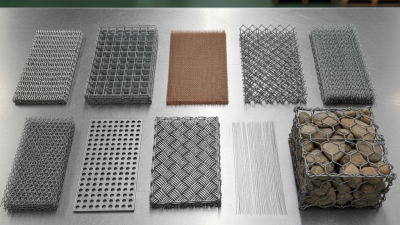
Steel wire mesh is a grid made by welding, weaving, or expanding steel wires. Its strength depends on wire diameter, opening size, steel grade, and connection quality. Welded mesh has fixed intersections, while woven mesh bends more easily around uneven surfaces. Stainless steel resists moisture and chemicals better than ordinary carbon steel. Galvanized coatings add protection, but they do not make mesh maintenance-free.

Construction uses mesh in concrete reinforcement, fencing, drainage covers, and temporary barriers. Industrial plants use it for machine guards, walkways, filtration, and screening. Farms use smaller mesh for animal enclosures and crop protection. Mining operations require wear-resistant screens for separating materials. The World Steel Association reported about 1.89 billion tonnes of crude steel production in 2023, showing the enormous material base behind these applications. Yet steel volume does not guarantee suitable mesh.

According to ASTM and ISO guidance, buyers should verify tensile strength, coating weight, opening tolerance, and weld consistency. A 2023 market analysis by Grand View Research also identified construction and industrial demand as major drivers of steel wire consumption. Request mill certificates and independent inspection records. Measure several openings, not just one. Small errors matter. Mesh can look perfect and still fail under vibration, corrosion, or repeated loading. That is the part many purchasing teams underestimate. A better specification connects the mesh to its real environment, load, temperature, and maintenance limits.

How to Evaluate Steel Wire Mesh Manufacturers

Evaluating steel wire mesh manufacturers starts with evidence, not polished catalogs. The World Steel Association reported 1.892 billion tonnes of crude steel production in 2023. This scale makes traceability essential. Ask for heat numbers, steel grades, and mill certificates linked to each shipment. A reliable supplier should explain wire diameter, aperture tolerance, weld strength, and coating mass in measurable terms. Vague claims are warning signs.

Request samples from different production batches. Measure the wire with a calibrated micrometer, then check openings across the sheet, not only at the center. Inspect welds for uneven nuggets, broken intersections, and excessive spatter. For galvanized mesh, verify zinc coating through documented testing. ISO 9001 certification can support process control, but it does not prove product quality by itself. That distinction matters.

Production capacity also deserves scrutiny. OECD steel market reports continue to highlight global overcapacity pressures, so impressive factory numbers may not reflect stable delivery. Ask for recent inspection records, rejection rates, and corrective-action reports. Check whether the stated monthly output matches machinery, labor, and storage space. A perfect sample can still mislead. I would also compare packaging details: rust-inhibiting paper, edge protection, bundle labels, and container loading photos. Some evaluations remain incomplete, especially when buyers skip independent pre-shipment inspection.

Top Steel Wire Mesh Manufacturers for Global Buyers - How to Evaluate Steel Wire Mesh Manufacturers

Evaluation Dimension Buyer-Side Benchmark What to Verify with the Manufacturer Importance Verification Method
Product Standards Clear compliance with the specification required for the destination market Confirm whether the offered mesh is manufactured to the applicable standard, such as ASTM A1064/A1064M for carbon-steel welded wire reinforcement or EN 10223-4 for steel wire welded mesh products. High Document review
Wire Diameter Control Declared nominal diameter with documented dimensional tolerances Request a dimensional inspection report covering wire diameter, mesh opening, panel length, panel width, and squareness. Measurements should be traceable to calibrated equipment. High Inspection report
Mesh Opening Accuracy Consistent aperture size throughout each panel or roll Check opening measurements at multiple points rather than relying on a single reading. Uneven openings can affect installation, filtration performance, load distribution, and appearance. High Sample inspection
Material Selection Steel grade and coating type matched to the service environment Verify whether the product is plain carbon steel, hot-dip galvanized steel, electro-galvanized steel, or stainless steel. For stainless products, request the stated grade and material test documentation. High Mill certificate
Corrosion Protection Coating specification stated by mass, thickness, or applicable standard For galvanized mesh, confirm the coating method, coating measurement method, surface condition, and acceptance criteria. Coating requirements should reflect the intended indoor, outdoor, humid, or coastal application. High Coating test
Weld Quality Uniform welded intersections without visible cracks, burn-through, or loose joints Inspect weld intersections for consistent fusion and adequate resistance to handling and installation. For structural applications, request the specified weld-shear or performance requirements. High Visual and mechanical test
Tensile and Yield Performance Mechanical properties stated for the selected wire grade Request test results for tensile strength, yield strength where applicable, elongation, and bend performance. The required values depend on the product standard and end use. High Laboratory report
Production Capability Ability to produce the required wire diameter, opening, format, and order volume Confirm available product formats, including rolls, flat panels, cut-to-size sheets, and fabricated sections. Ask for standard maximum dimensions, minimum order quantity, and production lead time. High Capability audit
Quality Management Documented incoming, in-process, and final inspection procedures Review the quality manual, inspection plan, nonconformity process, calibration records, and sample retention procedure. An ISO 9001 certificate may support the review but does not replace product testing. High System audit
Traceability Finished goods traceable to raw-material and production records Check whether lot numbers, coil numbers, production dates, inspection results, and packing records are linked. Traceability is particularly important for infrastructure and regulated projects. High Record sampling
Packaging and Export Handling Packaging protects mesh geometry and surface condition during international transport Confirm moisture protection, edge protection, pallet or bundle stability, lifting points, package markings, gross weight, net weight, and container-loading instructions. Medium Packing review
Documentation Complete commercial, technical, and shipping documentation Request drawings, technical data sheets, packing lists, certificates of origin where required, inspection reports, and any project-specific conformity documents before shipment. High Document checklist
Sample and Pre-Shipment Approval Production sample approved before full-scale manufacturing or dispatch Compare the approved sample with the purchase specification for wire diameter, opening, panel dimensions, weld appearance, coating condition, labeling, and packaging. High First-article approval
Commercial Reliability Transparent quotation with stable terms and clearly defined responsibilities Evaluate quotation validity, payment terms, delivery term, production lead time, replacement policy, warranty wording, claim procedure, and the treatment of dimensional or coating deviations. High Contract review
Application Suitability Mesh design technically appropriate for the intended use Match wire diameter, opening, panel format, coating, and mechanical performance to applications such as concrete reinforcement, fencing, partitions, cages, filtration support, or industrial guarding. High Engineering review
Note: The benchmarks above are practical procurement criteria. Final acceptance requirements should be based on the applicable product standard, project drawings, contract specifications, and local regulations.

Leading Steel Wire Mesh Manufacturers for Global Buyers

Leading steel wire mesh manufacturers for global buyers are judged by more than production volume. They must control wire diameter, aperture size, weld strength, and coating consistency. Grand View Research estimates that the global wire mesh market will expand steadily through 2030, supported by construction, agriculture, and industrial filtration demand. That growth increases pressure on manufacturers to provide repeatable quality, not merely low prices.

Reliable suppliers usually publish mill certificates, dimensional tolerances, and coating specifications. Buyers should request samples and measure mesh openings with calibrated tools. ASTM and ISO references can clarify tensile strength, welding performance, and corrosion protection. The World Steel Association reported global crude steel production at about 1.89 billion tonnes in 2023, showing the scale of the raw-material base behind downstream mesh production. Yet steel availability does not guarantee suitable mesh quality.

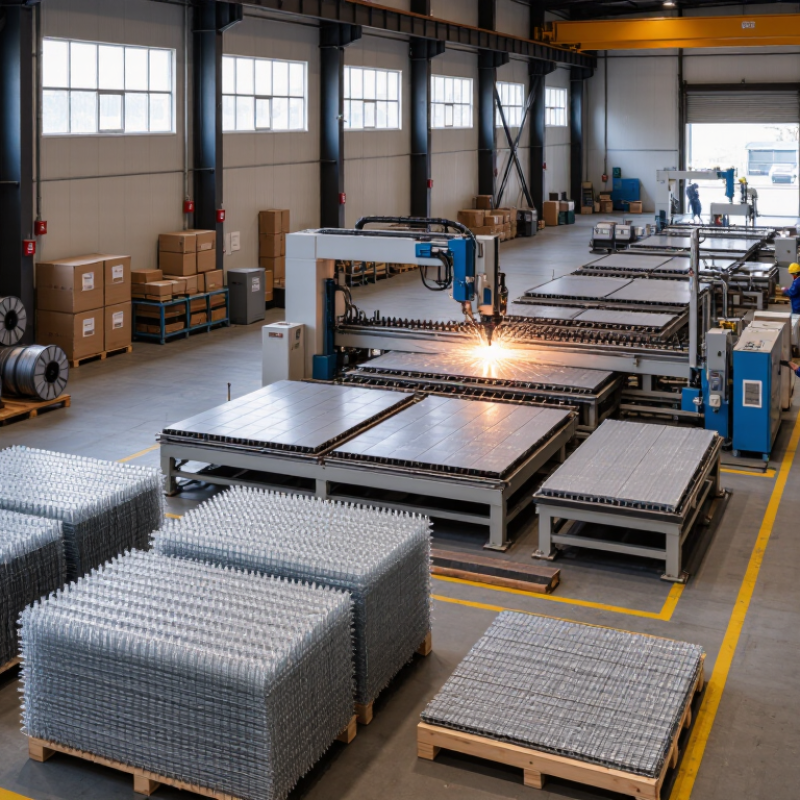
Look closely at manufacturing details. A strong factory should document wire drawing, straightening, welding, cutting, and packing procedures. Galvanized panels should show even coverage around weld points, where corrosion often begins. Export packaging also matters; poorly secured rolls can arrive distorted after a long sea journey. No supplier is perfect. Some published tolerances may not match actual batches, so independent inspection remains sensible. Factory audits, traceable test records, and clear replacement terms help global buyers reduce avoidable risk.

Key Product Standards and Quality Certifications

Top Steel Wire Mesh Manufacturers for Global Buyers

Reliable steel wire mesh begins with measurable requirements, not attractive catalog images. Buyers should confirm wire diameter, aperture size, panel dimensions, tensile strength, and permitted tolerances. These details affect load performance and installation accuracy. For welded reinforcement mesh, ASTM A1064 may apply in some markets. EN standards can apply to European projects. Requirements differ by application and destination.

Quality certifications deserve careful checking. ISO 9001 shows that a manufacturer operates a documented quality management system. It does not automatically guarantee perfect mesh. ISO 14001 may support environmental control, while ISO 45001 reflects occupational safety management. For galvanized products, buyers should request coating thickness or coating mass records. Relevant requirements may include ISO 1461 or project-specific specifications.

Ask for batch numbers, material certificates, dimensional inspection reports, and tensile test results. Samples should be checked with calipers, a mesh gauge, and a coating thickness meter. Small deviations can become costly during fencing, filtration, or reinforcement installation. Do not accept certificates without a stated scope, issue date, and accredited issuing body. A common mistake is treating a management certificate as product certification. It is not the same. Specifications can also be misunderstood when inches and millimeters are mixed. Clarify every unit in the purchase contract. Even experienced buyers should review tolerances again; a supplier may meet the standard while missing the project’s actual needs.

How to Choose a Reliable International Supplier

Top Steel Wire Mesh Manufacturers for Global Buyers

Choosing a reliable international steel wire mesh supplier requires more than comparing prices. Check the supplier’s production experience, material standards, and export records. A professional manufacturer should provide clear specifications for wire diameter, aperture size, mesh type, tensile strength, and surface coating. Ask for recent test reports, not generic certificates copied from an old project.

Request a physical sample before placing a large order. Inspect the mesh for uneven openings, loose welds, sharp edges, and inconsistent galvanizing. Reliable suppliers explain their inspection process and accept reasonable third-party checks. They should also confirm packaging details, loading capacity, shipping documents, and delivery terms in writing. Communication matters. Delayed replies can become costly during production changes. No supplier is perfect. Even experienced factories may miss a small detail, so keep approval records and photographs.

Tips: Compare at least three qualified suppliers. Verify company registration and factory capacity independently. Ask how rejected products are handled. Confirm whether quoted steel grades match your project requirements. Use a clear purchase contract with tolerances, inspection points, payment stages, and remedies for defects. A low price may hide thinner wire, weaker welds, or poor packaging. Inspect the first shipment carefully, because trust should grow from evidence, not promises.