What is an FRP Pipe Machine and How Does It Work?
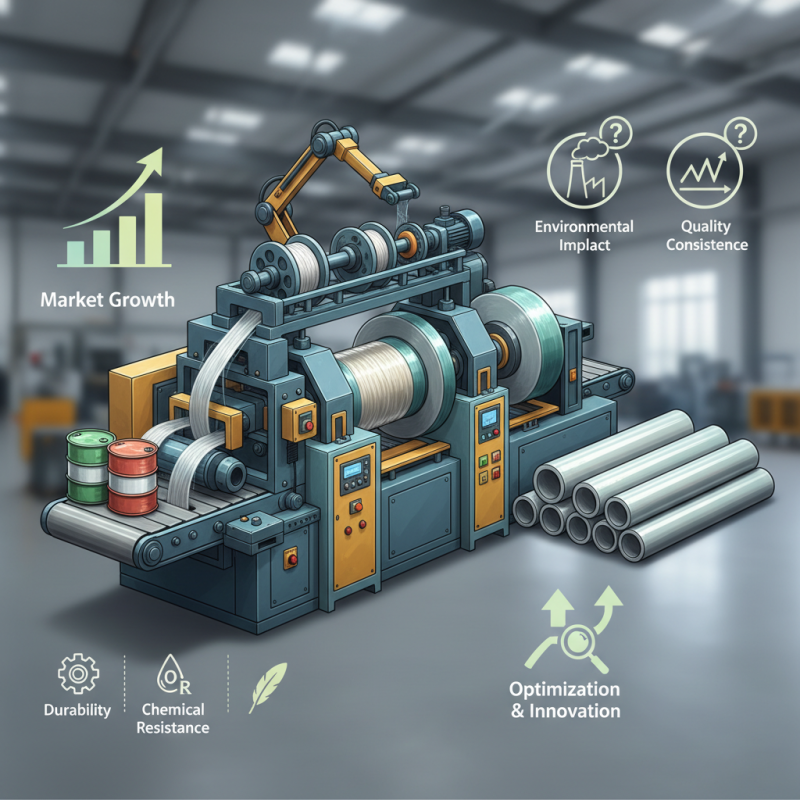
The frp pipe machine plays a crucial role in modern industrial applications. These machines are designed to manufacture fiberglass reinforced plastic (FRP) pipes. According to a recent market report, the global FRP pipe market is projected to reach $14.6 billion by 2027. This growth is driven by increasing demand for lightweight and corrosion-resistant materials.
FRP pipes offer several advantages over traditional materials. They are durable, resistant to harsh chemicals, and have a lower weight, which simplifies transportation and installation. However, the manufacturing process using an frp pipe machine can be complex and requires precision. Understanding the intricacies of these machines is essential for manufacturers aiming to enhance production efficiency.
Despite their benefits, the FRP market faces challenges. There are concerns about quality consistency and the environmental impact of production. As industries evolve, the optimization of the FRP pipe machine becomes imperative. Continuous improvement and innovation are necessary to meet growing demands while addressing these challenges effectively.
What is FRP (Fiber Reinforced Plastic) and its Applications in Piping?
Fiber Reinforced Plastic (FRP) is a composite material widely used in piping applications. It consists of a plastic matrix reinforced with fibers, typically glass or carbon fibers. This combination makes FRP pipes strong, lightweight, and resistant to corrosion. Many industries, like chemical processing and water treatment, utilize FRP due to these properties.
FRP pipes offer excellent durability. They can handle extreme temperatures and harsh chemicals. This makes them suitable for various environments. Installations in oil and gas, wastewater management, and even aquaculture benefit from FRP's versatility. However, one must consider how the fibers and resin interact over time. Aging may affect performance, requiring careful monitoring.
Tip: When selecting FRP pipes, assess the application thoroughly. Not all FRP is created equal. It's essential to match pipe specifications with operational conditions.
Despite its advantages, there are potential drawbacks. FRP can be sensitive to UV light, which may weaken it over time. Some manufacturers might reduce fiber content to save costs, affecting quality. Always request certifications and quality assurance reports.
Tip: Regular inspections can prevent unexpected failures. Document any changes in the environment where pipes are installed. This information can be vital for future maintenance plans.
Components of an FRP Pipe Machine and Their Functions Explained
FRP pipe machines are specialized equipment used for producing fiberglass reinforced plastic pipes. These machines consist of several key components, each with its unique function. One vital element is the resin mixing system, which accurately combines resin with hardeners. This mixture creates a strong, durable material essential for pipe manufacturing.
Another crucial component is the winding system. It wraps layers of fiberglass around a mold, ensuring the pipe attains the desired thickness and strength. The heating system also plays a critical role by curing the resin, solidifying the structure of the pipe. An operator must understand each part's function for optimal machine operation.
Tips: Always monitor the resin's consistency. Variations can weaken the pipes. Regular maintenance of the winding system is essential. Neglect can lead to irregular pipe shapes. Remember, even small mistakes in the process can lead to significant issues later.
Operators should also pay attention to the heating process. An incorrect temperature can compromise the pipe's integrity. It's a delicate balance that requires constant vigilance and adjustment. Properly trained personnel can make a difference in efficiency and product quality.
The Manufacturing Process of FRP Pipes: Step-by-Step Overview
The manufacturing process of FRP pipes relies on layered construction. First, raw materials like resin and fiberglass are prepared. These components are mixed carefully to create a uniform blend. The mixture is then heated to ensure proper consistency. This initial stage is critical; an improper mix can lead to weak pipes.
Next, the prepared materials are fed into a machine that shapes them. The machine applies pressure and heat, forming the pipes into the desired diameter and length. It’s vital to monitor the temperature, as too much heat can cause deformation. Workers must remain vigilant during this phase. Any oversight can result in defects that compromise the pipe's durability.
After shaping, the pipes go through a curing process. This involves letting them cool and harden in controlled environments. This step enhances the overall strength of the pipes. However, determining the right curing time can be tricky. Testing for structural integrity is crucial here. If this process is rushed, it can lead to future failures. Manufacturers must constantly refine their techniques to ensure quality and reliability.
Key Advantages of Using FRP Pipes in Various Industries
FRP pipes, or Fiber Reinforced Plastic pipes, are gaining traction across various industries. Their lightweight nature makes them easy to transport and install. According to a report by Grand View Research, the global FRP pipe market is projected to reach $8.3 billion by 2025, highlighting their growing importance. These pipes can withstand harsh chemicals and extreme temperatures, making them ideal for chemical plants and oil refineries.
One key advantage is their corrosion resistance. Traditional materials like steel often degrade in aggressive environments. FRP pipes, however, maintain integrity, reducing maintenance costs. A study from Research and Markets notes that FRP pipes can lower operational costs by up to 30%. This is significant for industries focused on sustainability and cost efficiency.
Tip: When considering FRP pipes, assess the specific chemical exposure. Not all FRP materials resist every chemical, so due diligence is necessary. Always consult with experts to ensure you choose the correct type for your needs.
The installation process of FRP pipes is also streamlined. Their lightweight design allows for quicker installation times compared to heavier materials. However, contractors should be mindful of proper handling techniques. Missteps in installation can lead to serious flaws in the system. These aspects should not be overlooked to maximize the benefits of FRP technology.
Advantages of Using FRP Pipes in Various Industries
Industry Standards and Performance Metrics for FRP Pipes
FRP pipes are gaining popularity due to their performance metrics and compliance with industry standards. These pipes are lightweight, strong, and resistant to corrosion. According to the American Society for Testing and Materials (ASTM), FRP pipes can exhibit a tensile strength of over 500 MPa. This makes them suitable for various applications, including chemical processing and water transportation.
A key performance metric for FRP pipes is the standard of pressure ratings. They are typically rated to endure pressures between 10 to 30 bar, depending on the thickness and material composition. The standards set by the American National Standards Institute (ANSI) help ensure their reliability in diverse environments. Still, buyers must pay attention to the variations in production quality, which can lead to inconsistencies in performance.
**Tip:** Always check the manufacturer’s compliance with industry standards. Look for certifications that validate the quality of the pipes.
It's essential to consider environmental factors when selecting FRP pipes. These pipes may degrade faster under UV light if not properly coated. Furthermore, while they excel in chemical resistance, not all FRP formulations are created equal. There can be exceptions to performance expectations.
**Tip:** Conduct performance testing under real-life conditions to ensure reliability. Don’t rely solely on theoretical data. Always gather feedback from actual usage.