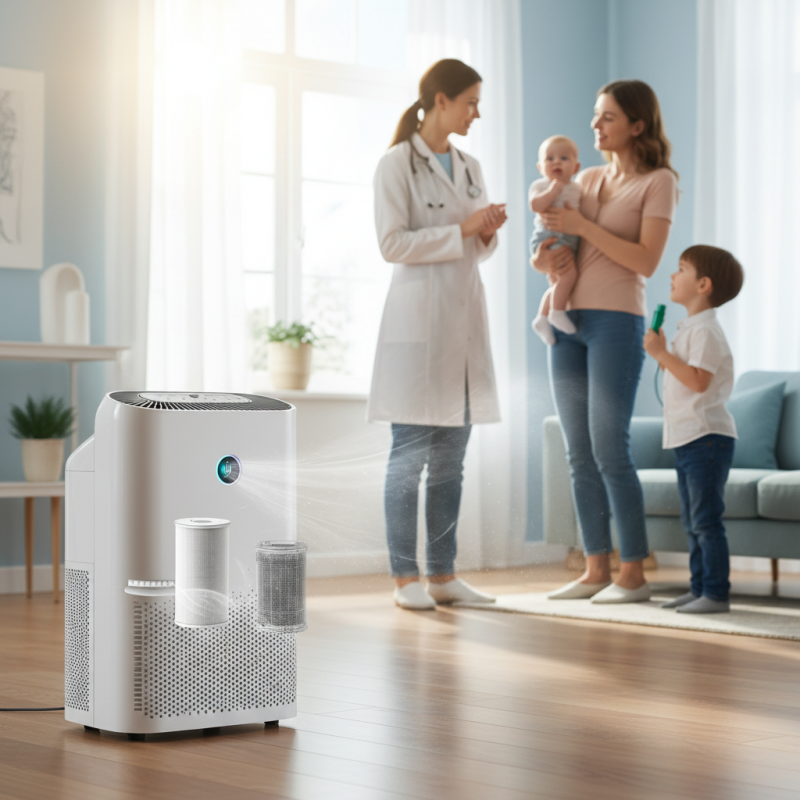
How to Choose the Best Medical Air Purifier for Your Home?
A clean and safe environment is essential, especially in homes with vulnerable individuals. Dr. Emily Chen, an expert in respiratory health, states, "A medical air purifier is a vital tool for ensuring indoor air quality." This emphasizes the importance of choosing the right device for your needs.
Selecting the best medical air purifier can be overwhelming. Many models exist, and not all are effective. Features like HEPA filters, CADR ratings, and noise levels matter. Research can feel daunting, but it's crucial.
Consider your specific requirements, such as allergies or respiratory conditions. Each person's situation is unique. A one-size-fits-all solution may not be suitable. Reflect on what you truly need from a medical air purifier. Your health and well-being deserve careful consideration.
Understanding the Importance of Air Purifiers in Medical Settings
Air purifiers play a crucial role in medical settings. Hospitals face constant air quality challenges. According to the World Health Organization, poor indoor air quality can lead to respiratory issues and infections. This is particularly concerning for immunocompromised patients. Effective air purification can reduce airborne contaminants significantly.
A study published in the Journal of Hospital Infection found that air purifiers can reduce viral load by up to 90%. This is vital in preventing the spread of infections. Filters that capture small particles are essential. HEPA filters are known to trap particles as small as 0.3 microns. Yet, many people overlook maintenance and correct filter replacement schedules. This can undermine the effectiveness of air purifiers.
One report revealed that nearly 50% of healthcare facilities do not have adequate air purification systems. This raises questions about patient safety. The selection of an air purifier must consider room size, filter types, and maintenance needs. Home users should mirror these standards to ensure proper air quality. It’s not enough to buy a purifier; one must understand its operation and upkeep.
Key Features to Look for in a Medical Air Purifier
When choosing a medical air purifier, consider the key features that can enhance your air quality. Look for HEPA filters; they capture 99.97% of particles. This includes allergens, dust, and pet dander. Ensure the purifier has an activated carbon filter. This removes odors and harmful gases. Some units even include UV-C light. It can help kill bacteria and viruses in the air.
Tips: Check the Clean Air Delivery Rate (CADR). A higher CADR means faster air cleaning. Consider room size too. A unit that’s too small won’t clean effectively. Make sure the noise level is acceptable for your space. You don’t want a purifier that disrupts your peace.
Consider maintenance costs. Filters need replacement regularly. Some models remind you when it’s time. Think about energy efficiency as well. An energy-efficient model saves money long-term. Reflect on where you’ll place it. A central location works best for even air distribution.
Types of Filters Commonly Used in Medical Air Purifiers
When selecting a medical air purifier, understanding the types of filters is crucial. Many models utilize HEPA filters. These filters can capture 99.97% of particles as small as 0.3 microns. This includes allergens, dust, and even some bacteria. Research shows that HEPA filtration significantly improves indoor air quality. However, they may need frequent replacement, which can lead to costs that add up over time.
Another common type is activated carbon filters. They excel at removing odors and volatile organic compounds (VOCs) from the air. These filters adsorb gases and chemicals, providing a cleaner breathing environment. A study from the Environmental Protection Agency noted that VOCs can lead to various health issues. However, carbon filters can become saturated quickly, diminishing their effectiveness. Regular maintenance is essential to ensure optimal performance.
Ultraviolet (UV) light filters are also gaining popularity. They use UV light to kill bacteria and viruses in the air. While effective, they may not eliminate particulate matter like dust or pollen. Users need to weigh the pros and cons of each filter type. It's essential to consider the specific needs of your household. Balancing cost, maintenance, and effectiveness can lead to better air quality in your home.
Evaluating the Size and Coverage of Air Purifiers for Your Home
When choosing a medical air purifier, evaluating its size and coverage is crucial. The right size depends on your room dimensions. For example, a common recommendation is to select an air purifier that can effectively filter air in a space of at least 500 square feet. According to research from the Environmental Protection Agency, poor indoor air quality can lead to health issues.
You may wonder how specific coverage relates to air changes per hour (ACH). Medical experts often suggest an ACH of 4 or higher for optimal results. This means the air purifier should be capable of filtering the entire volume of air in a room four times within an hour. Many users find it difficult to determine the right balance between size and efficiency.
Air purifiers may not be effective if they are too small for the space. Conversely, larger units can be expensive to run and maintain. Studies indicate that many households choose less powerful units, thinking they are adequate. The truth is, underpowered air purifiers might leave a significant amount of dust and allergens unchecked, leading to unnecessary health risks. Proper evaluation is essential to ensure that your air purifier meets your home's specific needs.
Maintenance Tips for Ensuring Optimal Performance of Air Purifiers
Maintaining your air purifier is essential for its longevity and effectiveness. Filters should be checked regularly. Some need replacement every few months, while others can last up to a year. Pay attention to alerts and indicators. Dirty filters can reduce airflow and compromise air quality, which defeats the purpose of having the purifier.
Ensure your air purifier is placed in the right location. Avoid corners and enclosed spaces. Allow proper airflow around the device. Dust and debris in the surroundings can clog filters faster. Regularly cleaning the device’s exterior helps too. A damp cloth can remove accumulated dust, ensuring it runs smoothly.
Consider the settings you use. Many purifiers have different modes. Using high settings continuously may lead to more wear and quicker filter changes. In less polluted times, a lower setting can be adequate. It’s a balance between performance and maintenance. Reflecting on your usage habits can guide better decisions.