


10 Best Metal Mesh Suppliers for Global Buyers
Metal mesh is no longer a simple commodity bought by weight. It supports filtration, architectural façades, machine guarding, ventilation, and industrial screening. Buyers now compare aperture size, wire diameter, tensile strength, surface finish, and traceability before approving a supplier.
Industry data shows why supplier selection matters. The World Steel Association reported global crude steel production of approximately 1.88 billion tonnes in 2023. This immense production base does not guarantee consistent mesh quality. Meanwhile, MarketsandMarkets identifies filtration and separation as important growth areas for wire mesh applications. Exact market forecasts differ, however. Definitions vary between woven mesh, welded mesh, perforated sheet, and expanded metal.
That uncertainty deserves attention. A low quoted price may hide uneven openings, weak welds, or unclear material grades. In real purchasing, a 0.5-millimeter aperture error can affect airflow, filtration efficiency, or assembly fit. Export buyers also need reliable packaging, inspection records, mill certificates, and clear delivery terms. The best suppliers should explain tolerances instead of promising perfection.
This guide reviews 10 Best Metal Mesh Suppliers for Global Buyers through a practical, evidence-based lens. It considers product range, manufacturing capability, quality control, customization, export experience, and communication. Supplier websites provide useful clues, but independent verification remains necessary. No ranking is flawless. Buyer requirements differ.
The selection process also reflects recognized quality principles, including documented inspection and process consistency associated with ISO 9001 systems. Buyers should request samples, confirm technical drawings, and test critical batches before placing large orders. A trustworthy supplier makes those steps easy. That is often more valuable than a polished catalog.
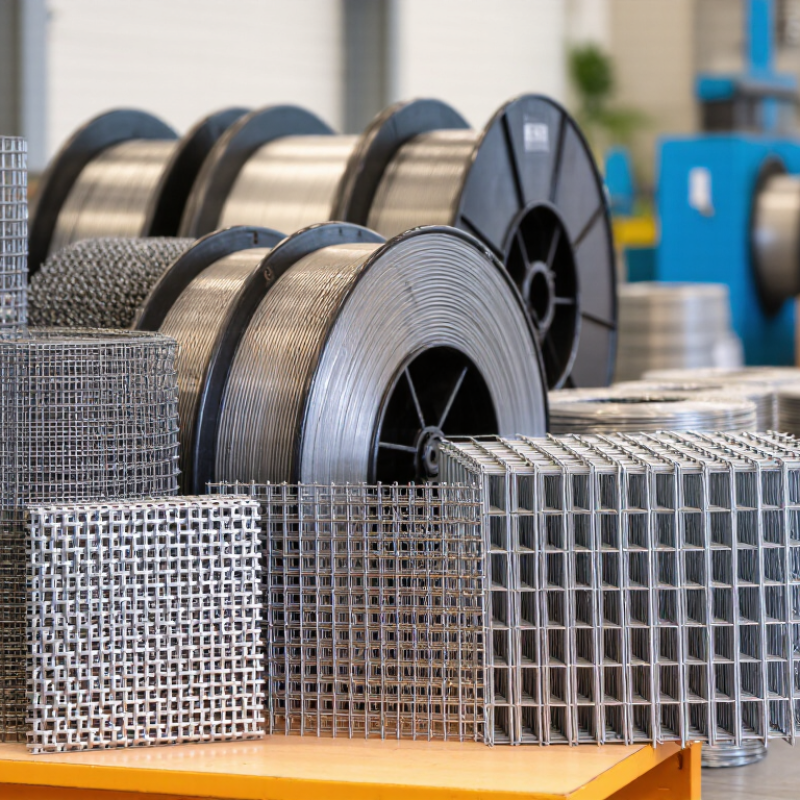
Metal Mesh Types and ISO 9044 Classification by Weave, Material, and Opening
For global buyers, metal mesh selection begins with weave, material, and opening. ISO 9044 provides a technical framework for industrial woven wire cloth. It addresses mesh count, wire diameter, aperture size, tolerances, and inspection methods. These details make supplier comparisons more reliable.
Plain weave offers balanced strength and regular openings. Twilled weave supports heavier wires and finer filtration. Dutch weave uses different wire directions for high-strength separation. Material changes performance too. Stainless steel resists moisture and many chemicals. Carbon steel offers practical strength at a lower cost. Copper alloys provide conductivity and useful corrosion resistance in selected environments.
Opening matters most during real filtration. A small error can change flow, pressure, and particle retention. Measure the aperture, not only the advertised mesh count. ISO 9044 testing may involve visual checks, dimensional measurement, and statistical sampling. Ask for material certificates, weave specifications, batch records, and inspection results. A capable supplier should explain wire tolerance clearly. Vague answers deserve caution.
Field experience also reveals a weakness in many purchasing plans. Buyers often choose mesh by price before defining operating temperature, load, and cleaning method. That decision can fail later. Request samples. Inspect them under magnification. Compare measured openings with the required range. Specifications are useful, but actual mesh can still vary slightly between production batches.
10 Best Metal Mesh Suppliers for Global Buyers - Metal Mesh Types and ISO 9044 Classification by Weave, Material, and Opening
| No. | ISO 9044 Weave Classification | Material | Nominal Mesh | Wire Diameter | Nominal Opening | Approx. Open Area | Typical Supply Form | Key Material Characteristics | Typical Global-Buyer Applications | Recommended Procurement Checks |
|---|---|---|---|---|---|---|---|---|---|---|
| 1 | Plain weave 10 mesh × 0.80 mm wire |
Carbon steel with zinc coating | 10 openings/in | 0.80 mm | 1.74 mm | 46.9% | Rolls and cut panels | High mechanical strength with improved atmospheric corrosion resistance from the zinc coating. | Guards, ventilation screens, agricultural equipment, general-purpose partitions, and coarse screening. | Confirm zinc coating mass, base-wire tensile strength, roll width, edge condition, and coating uniformity. |
| 2 | Plain weave 20 mesh × 0.40 mm wire |
Stainless steel 304 | 20 openings/in | 0.40 mm | 0.87 mm | 46.9% | Rolls, discs, and sheets | Good general corrosion resistance, formability, and weldability for indoor and moderately corrosive environments. | Air filtration, machine guards, food-processing screens, sieving, and architectural infill. | Request material test documentation, weave inspection, aperture tolerance, flatness, and surface-finish requirements. |
| 3 | Plain weave 40 mesh × 0.25 mm wire |
Stainless steel 316L | 40 openings/in | 0.25 mm | 0.385 mm | 36.8% | Fine rolls and precision cut parts | Enhanced resistance to chlorides and many chemicals because of its molybdenum content. | Marine filtration, chemical processing, pharmaceutical equipment, water treatment, and fine screening. | Verify 316L chemistry, chloride-service suitability, aperture distribution, burr control, and traceability documents. |
| 4 | Plain weave 60 mesh × 0.16 mm wire |
Stainless steel 304 | 60 openings/in | 0.16 mm | 0.263 mm | 38.7% | Fine mesh rolls and filter discs | Balanced corrosion resistance and flexibility for general filtration and separation work. | Particle screening, laboratory sieves, fluid filters, insect screens, and precision ventilation. | Check actual aperture measurement, mesh count, wire diameter, cleanliness, and resistance to handling damage. |
| 5 | Plain weave 100 mesh × 0.10 mm wire |
Stainless steel 316L | 100 openings/in | 0.10 mm | 0.154 mm | 36.7% | Precision rolls, discs, and elements | Fine, corrosion-resistant mesh suitable for controlled filtration and clean-processing environments. | Fine powder separation, laboratory filtration, medical equipment, fuel filtration, and process screens. | Confirm opening-size tolerance, mesh uniformity, particle-release control, packaging, and inspection sampling method. |
| 6 | Plain weave 150 mesh × 0.063 mm wire |
Copper, Cu-ETP | 150 openings/in | 0.063 mm | 0.106 mm | 39.4% | Rolls, gaskets, and shielding panels | High electrical and thermal conductivity with good formability; develops a natural oxide surface over time. | Electromagnetic shielding, grounding screens, heat-transfer components, laboratory screens, and decorative panels. | Verify copper grade, electrical resistance, oxidation protection, mesh integrity, and storage conditions. |
| 7 | Twill weave 200 mesh × 0.056 mm wire |
Stainless steel 316L | 200 openings/in | 0.056 mm | 0.071 mm | 15.0% | Fine filter cloth and formed elements | Twill construction provides greater wire support and durability than a comparable fine plain weave. | High-fineness filtration, hydraulic systems, polymer processing, laboratory separation, and pressure filters. | Confirm weave pattern, filtration rating, pressure-drop data, edge protection, weld quality, and cleaning compatibility. |
| 8 | Plain weave 325 mesh × 0.035 mm wire |
Nickel alloy 600 | 325 openings/in | 0.035 mm | 0.043 mm | 30.3% | Specialty rolls and precision filter media | Good resistance to heat, oxidation, and several corrosive environments, with higher material cost than stainless steel. | High-temperature filtration, chemical processing, furnace components, aerospace systems, and corrosive gas service. | Request alloy verification, high-temperature service data, aperture inspection, annealing condition, and full traceability. |
| 9 | Plain weave 80 mesh × 0.18 mm wire |
Aluminum alloy 5056 | 80 openings/in | 0.18 mm | 0.138 mm | 19.0% | Lightweight rolls and formed screens | Low density, good corrosion resistance, and easy handling; lower abrasion resistance than steel or stainless steel. | Lightweight screening, ventilation, insect barriers, electromagnetic applications, and architectural components. | Confirm alloy designation, temper, wire strength, dimensional stability, surface treatment, and galvanic-contact restrictions. |
| 10 | Twill weave 12 mesh × 0.70 mm wire |
Brass CuZn37 | 12 openings/in | 0.70 mm | 1.42 mm | 44.8% | Decorative sheets and cut panels | Good formability, attractive appearance, and moderate corrosion resistance in suitable indoor environments. | Architectural screens, acoustic panels, interior partitions, decorative filters, and equipment guards. | Check alloy composition, color consistency, surface protection, flatness, cut-edge quality, and indoor-use limitations. |
| Technical note: ISO 9044 classification should be read together with the specified weave, material, nominal wire diameter, mesh count, and aperture. Open-area percentages shown above are approximate nominal calculations and may vary with manufacturing tolerances, wire shape, and measurement method. | ||||||||||
Related Posts
-
How to Choose the Right Metal Mesh for Your Project?
-
How to Choose the Right Metal Mesh for Your Industrial Applications
-
What Are the Top Types of Metal Mesh?
-
Exploring Trends in Metal Mesh Supply & Demand at the 2025 China Import and Export Fair: Insights and Data
-
The Ultimate Guide to Choosing the Right Wire Mesh Products for Your Needs
-

2026 Top Trends in Steel Mesh Applications and Innovations?