2026 Top Beer Machine Trends for Global Buyers Insights?
The rising trend of Beer Machines has captured the attention of global buyers. According to a recent report by the Beverage Equipment Manufacturers Association, sales of Beer Machines have increased by 25% in the past two years. This growth indicates a shift in consumer preferences towards convenient home brewing options. Experts believe this trend reflects the evolving craft beer culture.
John Smith, a recognized leader in the beverage industry, noted, "Beer Machines are revolutionizing how consumers interact with their favorite brews." His insights highlight the innovative design and advanced technology incorporated into these machines. As more consumers seek personalized brewing experiences, Beer Machines will continue to gain traction.
However, the market faces challenges. Not all machines deliver consistent results. Consumers report varying quality in brewed beer. This inconsistency is a major concern for buyers. As the demand for high-quality beer grows, manufacturers must address these issues. They should focus on enhancing machine reliability and brewing accuracy. The success of Beer Machines in the future relies on overcoming these hurdles while meeting consumer expectations.
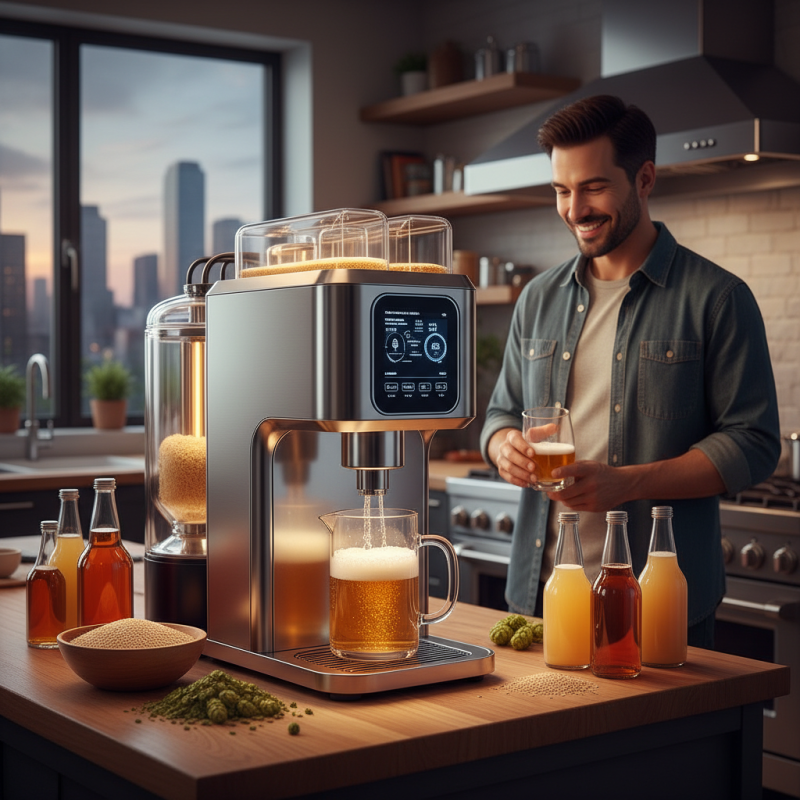
Emerging Technologies in Beer Machine Production for 2026
Emerging technologies in beer machine production for 2026 promise exciting advancements. Automated brewing techniques are gaining traction. Smart sensors monitor temperature and fermentation levels in real-time. This ensures consistent quality and flavor. Predictive analytics can optimize ingredient usage. These innovations help reduce waste and improve efficiency.
3D printing is also making waves in equipment manufacturing. Customizable parts can be created on demand. This reduces lead times and costs for breweries. Integration of IoT technology allows machines to communicate with each other. This connectivity enhances the brewing process and data collection.
However, these technologies raise questions. Will smaller breweries be able to afford such advancements? Access to technology may create gaps in the market. Additionally, reliance on automation could compromise traditional brewing methods. It is crucial to strike a balance. Embracing innovation while preserving craftsmanship is a challenge that lies ahead.
Market Analysis: Global Demand for Innovative Beer Machines
The global market for innovative beer machines is experiencing rapid growth. A recent report by Allied Market Research highlights a projected CAGR of 5.3% from 2023 to 2030. This surge is driven by increasing consumer demand for high-quality and convenient at-home brewing solutions. As more people seek craft beer experiences, the appeal of advanced brewing technology grows.
The modern consumer is looking for more than just basic functions. Features like automated brewing processes, mobile app integration, and eco-friendly designs are crucial. For example, data shows that 72% of consumers prefer machines that offer customization options, allowing for unique flavor profiles. However, the challenge lies in balancing innovation with user-friendliness. Many beer machines come with steep learning curves, which can deter potential buyers.
Market research indicates that 54% of potential consumers express interest in machines that provide detailed brewing analytics. This indicates a shift toward a more tech-savvy audience. Yet, manufacturers must reflect on the feedback regarding high initial costs. This could alienate budget-conscious consumers. Understanding these dynamics is essential for capitalizing on future opportunities in the growing beer machine market.
2026 Beer Machine Trends Analysis
Sustainability Trends Shaping the Future of Beer Machine Design
As the global beer industry evolves, sustainability is a key driver in beer machine design. Manufacturers are focusing on energy-efficient technologies. These innovations not only reduce carbon footprints but also lower operational costs for breweries. Efficient cooling systems, for example, are becoming standard to minimize energy use during production.
Materials matter too. Recyclable and biodegradable components are gaining popularity. Machines using sustainable materials help to lessen environmental impact. Yet, challenges remain. High-quality substitutes for traditional materials can be expensive, raising production costs. This dilemma leads to careful consideration of cost versus sustainability.
Moreover, the lifecycle of these machines is crucial. Designing for durability ensures that machines last longer, reducing waste. However, finding the right balance between functionality and environmental responsibility is complex. Each decision impacts the overall sustainability profile. Therefore, ongoing research and development are essential to address these challenges and push boundaries in beer machine innovation.
Consumer Preferences: Features Driving Beer Machine Sales in 2026
As we approach 2026, consumer preferences in the beer machine market continue to evolve. One significant trend is the demand for machines that enhance user experience. Features like touchscreens and customization options are gaining traction. Users want to personalize their brews, adjusting flavors and carbonation levels to suit their taste. This desire for individualized products is shifting the market.
Portability is another critical factor driving sales. Consumers are looking for compact designs that easily fit in various settings, from kitchens to outdoor parties. Machines that provide ease of transport offer convenience and appeal. Many buyers also prioritize energy efficiency, with eco-friendly features becoming more attractive. As energy costs rise, customers are increasingly mindful of their consumption habits.
Despite these trends, the market faces challenges. Some consumers express frustration over complicated setups and maintenance. Simplicity and user-friendliness are essential. Companies need to address these concerns to capture a wider audience. Understanding the balance between advanced features and ease of use will play a vital role in the future success of beer machines.
2026 Top Beer Machine Trends for Global Buyers Insights
| Feature | Consumer Preference (%) | Impact on Sales (%) | Projected Growth (%) |
| Smart Connectivity | 35% | 40% | 25% |
| Compact Design | 30% | 35% | 20% |
| Energy Efficiency | 28% | 30% | 22% |
| Customizable Features | 25% | 28% | 30% |
| User-friendly Interface | 32% | 34% | 18% |
The Role of Connectivity and Smart Features in Modern Beer Machines
The rise of smart technology has significantly transformed beer machines. Connectivity features are now essential in modern brewing. Users can control their machines remotely through apps. This integration allows for precise temperature adjustments, brewing times, and flavor profiles. However, not all features work seamlessly. Some users report connectivity issues, leading to frustration.
Smart features enhance the brewing experience beyond basic functions. Sensors monitor ingredient freshness and carbon dioxide levels. Users receive notifications when it’s time to stock up. This offers convenience but can create a dependency on technology. Users sometimes ignore traditional brewing methods, relying too heavily on automated systems.
The blend of innovation and tradition should be balanced. While smart machines provide new opportunities, they may also diminish craft. Buyers need to consider how much automation they truly want. The relationship between brewer and process could change significantly. Reflecting on what brewing means is essential in this new era.