Selecting the right woven wire screens in 2026 requires more than comparing mesh counts or catalog prices. Global buyers need stable openings, consistent wire diameter, and dependable performance under real working conditions. A screen used for aggregate sizing faces sharp stone, vibration, dust, and repeated impact. A food-processing screen faces different demands, including cleanability, surface finish, and material traceability.
According to woven wire screens consultant Elena Marquez, “The best screen is not the finest screen; it is the one that keeps production stable.” That practical view matters. A smaller opening may improve separation, yet it can also reduce throughput and increase blockage. A heavier wire may last longer, but it can lower open area. Small details matter.
This guide reviews leading screen types for mining, recycling, construction, agriculture, filtration, and food-processing applications. It considers stainless steel, high-carbon steel, galvanized wire, square mesh, woven wire, and specialized reinforced designs. The evaluation also looks at aperture accuracy, edge protection, tensioning methods, corrosion resistance, and supplier consistency.
No ranking is perfect. Operating conditions change.
A product that performs well in a dry quarry may struggle in wet, abrasive material. Buyers should confirm sample testing, inspection records, tolerances, and replacement availability before placing large orders. Product photos can mislead. A bright surface does not prove superior wire quality, and a low quotation may conceal short service life. The strongest purchasing decision connects technical evidence with field experience, while leaving room to question assumptions.
2026 Top Woven Wire Screens for Global Buyers
What Are Woven Wire Screens and How Do They Work?
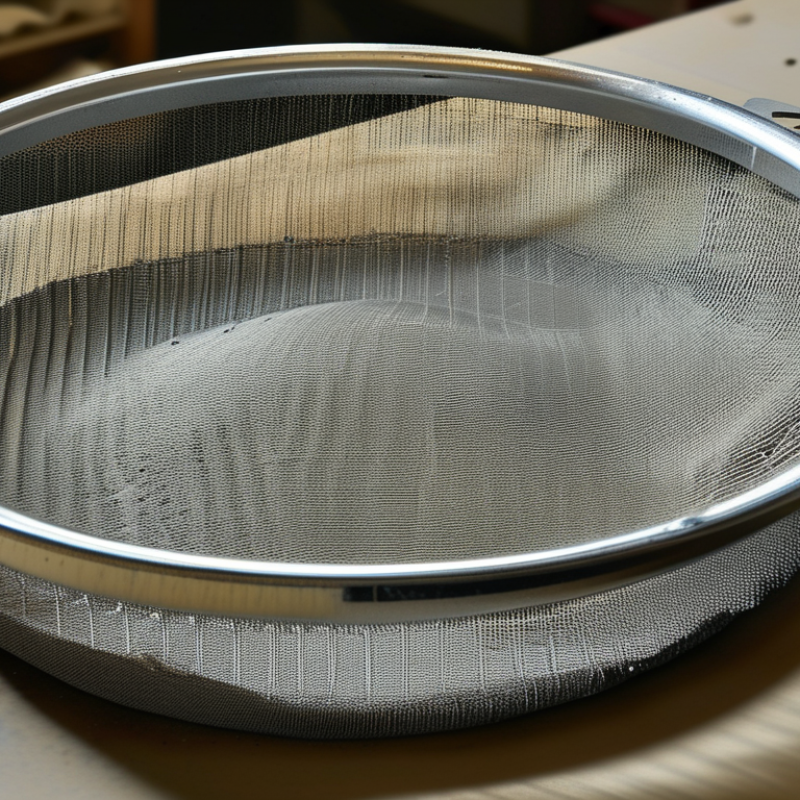
Woven wire screens are filtering surfaces made from interlaced metal wires. Their openings separate materials by particle size. Each opening acts like a controlled doorway. Wire diameter, aperture shape, and weaving pattern determine the screening result.
In quarrying, recycling, and aggregate processing, material moves across the screen deck. Vibration helps smaller particles pass through the openings. Oversized pieces travel toward the discharge end. A square mesh usually provides accurate sizing, while a slotted opening can improve flow and reduce blockage. Moisture, clay, and irregular particles still create problems. No screen performs perfectly in every condition.
From field inspections, I have found that screen selection requires more than checking mesh count. Buyers should compare aperture size, wire strength, open area, and operating temperature. Tension must also remain even across the panel. Loose areas may cause uneven separation and premature wear. A practical test with the actual feed material often reveals weaknesses that product sheets miss. This step can feel inconvenient, but it prevents expensive guesswork. Inspection records should include wire diameter, opening measurements, weld or hook quality, and surface condition. Small deviations matter when a process depends on consistent grading.
2026 Top Woven Wire Screens for Global Buyers
Key Types of Woven Wire Screens for Different Applications
Woven wire screens differ by weave pattern, wire material, opening size, and working load. Selecting the right type starts with the process, not the catalog.
Plain weave is common for screening aggregates, powders, and general particles. Each wire passes over and under the next wire. It offers stable openings and simple cleaning. Twilled weave uses a stronger interlacing pattern. It handles heavier loads and supports finer openings. This option suits mineral processing, pressure filtration, and demanding industrial separation.
Dutch weave provides excellent filtration control. Its tightly packed wires create narrow, consistent passages. It is useful for hydraulic fluids, polymer melt filtration, and fine liquid processing. Stainless steel resists corrosion near water, chemicals, and food equipment. High-carbon steel offers useful wear resistance in dry screening. Galvanized wire can support less aggressive outdoor applications.
Measure carefully.
Opening size affects both throughput and separation accuracy. Wire diameter influences strength, flow, and service life. In field inspections, blocked openings often reduce performance before visible damage appears. Cleaning access matters more than many purchasing teams expect. Temperature, vibration, moisture, and particle shape also deserve attention.
No selection chart is perfect. A screen that works well with dry sand may fail with damp material. Testing a small sample can reveal blinding, abrasion, or unexpected flow loss. Buyers should request mesh count, aperture size, wire diameter, material grade, tolerance, and test data. These details make international comparisons more reliable.
2026 Top Woven Wire Screens for Global Buyers
How to Choose the Best Woven Wire Screen in 2026
Choosing a woven wire screen starts with the material being separated. Stainless steel suits humid areas and repeated washing. Carbon steel may reduce cost in dry, less corrosive environments. For high-temperature work, confirm the alloy’s service limit. Do not judge quality by appearance alone.
Mesh opening controls the cut size, while wire diameter affects strength and flow. A fine screen can improve accuracy but may blind quickly with damp particles. A heavier wire lasts longer, yet it can reduce open area. Check aperture size, weave pattern, tensile strength, and thickness against your process requirements. Ask for inspection records and dimensional tolerances. Reliable suppliers should explain how measurements were taken.
In my experience, a small trial saves more money than a rushed bulk order. Test the screen with your actual material, vibration, moisture, and cleaning method. Watch for broken wires, blocked openings, and edge damage. It sounds simple. It is often missed. Packaging also matters during international shipping; rolled mesh needs firm protection against crushing and moisture. I would not approve a screen from a clear sample alone. One overlooked variable, such as unexpected particle impact, can change the result. Recheck the screen after real production, not only after installation.
Material selection controls service life, accuracy, and contamination risk. Stainless steel remains preferred for wet, abrasive, and heat-exposed applications. Carbon steel suits dry screening and lower-cost installations. According to World Steel Association’s 2025 statistical release, global crude steel production remained near 1.9 billion tonnes in 2024. This scale supports broad steel availability, but not every wire grade offers equal corrosion resistance. Buyers should request the chemical composition and tensile strength certificate.
Mesh specifications need practical checking. Mesh count alone can mislead. A 100-mesh cloth with thicker wire has smaller openings than one with thinner wire. The approximate aperture equals 25.4 divided by mesh count, minus wire diameter, in millimetres. ASTM E11 and ISO 9044 provide recognized methods for sieve openings, tolerances, and cloth inspection. For fine powders, verify aperture distribution, not only the nominal mesh number. Ask for measured results.
Performance depends on more than metal. Vibration intensity, feed moisture, particle shape, and bed depth can change throughput sharply. A technical review from the U.S. National Institute for Occupational Safety and Health links dust-control performance with enclosure and airflow design, not screening media alone. This matters. In field testing, a screen may meet the specification yet fail early because particles strike unevenly. Edge tension, support spacing, cleaning access, and replacement time deserve equal attention.
My own caution: laboratory data often looks cleaner than production reality. Always request a trial panel.
For global buyers, woven wire screen quality starts with measurable specifications, not attractive catalog images. Define mesh count, aperture tolerance, wire diameter, material grade, and roll width before requesting prices. A 100-mesh screen can perform poorly if openings vary across the roll. Ask for inspection records, material certificates, and a sample cut from current production. Check it with a calibrated caliper and, where possible, sieve analysis. Small details matter.
International standards help buyers compare suppliers, but certificates need context. Confirm the applicable ASTM, ISO, or EN method and its test conditions. Request tensile strength, corrosion resistance, and dimensional reports tied to a batch number. Packaging also deserves attention. Edges should remain flat, dry, and protected during ocean transport. A supplier who explains tolerances clearly often inspires more confidence than one promising perfect results.
Supplier evaluation should combine documents, samples, communication, and production evidence. Ask who controls incoming wire, how weaving defects are recorded, and whether rejected rolls remain traceable. A remote factory review can examine calibration schedules, storage conditions, and final inspection photos. Still, paperwork is not proof. One early sample may hide variation in a larger batch. I have seen specifications accepted too quickly, then questioned after delivery. Build an approval plan with first-article checks, random roll inspections, and corrective-action records. Leave room for review. Good purchasing is disciplined, but never careless.
A practical comparison table for selecting woven wire screens by opening size, material, compliance documentation, purchasing requirements, and supplier performance.
| Evaluation Dimension | Data Point | Typical Market Specification | Quality or Purchasing Benchmark | Buyer Verification Method | Global Buying Relevance |
|---|---|---|---|---|---|
| Screen Classification | Mesh count | 20, 40, 60, 100, and 200 openings per linear inch are widely specified for industrial screening. | The mesh count must be stated together with wire diameter; mesh count alone does not define the opening. | Check the product drawing, technical data sheet, and measured openings under magnification. | Using mesh count plus wire diameter reduces specification differences between countries and suppliers. |
| Opening Size | Indicative square aperture | 20 mesh with 0.40 mm wire: approximately 0.87 mm; 40 mesh with 0.25 mm wire: approximately 0.39 mm; 60 mesh with 0.19 mm wire: approximately 0.23 mm; 100 mesh with 0.10 mm wire: approximately 0.15 mm; 200 mesh with 0.063 mm wire: approximately 0.064 mm. | Actual aperture tolerance depends on the applicable specification, weaving accuracy, and wire tolerance. | Request aperture test results and compare them with the approved drawing or purchase order. | Clear aperture data is essential for filtration, screening efficiency, flow rate, and particle separation. |
| Material Selection | Stainless steel grades | 304 stainless steel is commonly used for general corrosion resistance; 316 stainless steel is preferred where chloride exposure or stronger corrosion resistance is required. | Material grade, chemical composition, and heat or batch traceability should be documented. | Review the material test certificate and, where required, perform positive material identification. | Correct grade selection helps prevent premature corrosion in marine, chemical, food, and outdoor applications. |
| Material Selection | Carbon steel and coated wire | Plain carbon steel is used for economical, general-purpose screening; galvanized wire offers improved resistance to atmospheric corrosion. | The coating type, coating mass or thickness, wire diameter, and coating uniformity should be specified. | Inspect surface coverage, measure wire diameter, and request coating test records where applicable. | Coated wire can reduce lifecycle cost in dry or moderately corrosive environments, but it is not equivalent to stainless steel in severe chemical service. |
| Weave Pattern | Plain, twilled, and Dutch weave | Plain weave is common for general screening; twilled weave supports finer wires and higher wire stability; Dutch weave is used for fine filtration and pressure-retaining applications. | The weave pattern must match the required aperture, strength, pressure, and cleaning method. | Confirm the weave through a sample, cross-sectional drawing, or inspection photograph. | Choosing the correct weave helps balance filtration precision, mechanical strength, pressure drop, and service life. |
| Dimensional Control | Sheet or roll width and length | Common industrial supply formats include rolls and cut panels; actual widths and lengths are agreed by order and production capability. | Finished dimensions, squareness, roll direction, edge treatment, and winding condition should be defined before production. | Measure width, length, diagonal difference, and edge condition on a pre-shipment sample or inspection lot. | Accurate dimensions reduce installation waste and simplify customs packing, handling, and downstream fabrication. |
| Mechanical Performance | Tensile strength and wire integrity | Performance depends on material grade, wire diameter, temper, weave type, and heat treatment. | No broken wires, loose selvage, abnormal dents, severe waviness, or open seams should appear in an accepted shipment. | Use visual inspection, dimensional checks, tensile testing where specified, and sampling based on an agreed inspection plan. | Mechanical consistency is important for vibrating screens, aggregate processing, recycling, mining, and heavy-duty separation. |
| Surface Quality | Finish and cleanliness | Available finishes may include bright, annealed, galvanized, or passivated surfaces, depending on material and application. | The surface should be free from oil contamination, rust, sharp protrusions, excessive discoloration, and weaving damage. | Inspect under suitable lighting and record defects by lot, roll, panel, or bundle. | Surface quality affects corrosion resistance, hygiene, cleanability, appearance, and safe handling. |
| Standards and Documentation | Applicable technical references | ASTM E11 is widely referenced for wire cloth screening and test sieve requirements; ISO 4783-1 provides guidance for industrial wire screens and wire cloth selection. | The purchase order should identify the selected standard, edition where relevant, mesh, wire diameter, aperture, material, and tolerances. | Compare certificates, drawings, inspection reports, and test results with the stated standard. | Recognized standards create a common technical language for international quotations and quality claims. |
| Traceability | Batch and production records | Each shipment should be identifiable by purchase order, production lot, material batch, inspection date, and packing reference. | Traceability records should remain linked from raw wire to finished roll or cut panel. | Request lot labels, packing lists, material certificates, and inspection records before shipment. | Traceability supports warranty claims, regulated applications, repeat purchasing, and root-cause analysis. |
| Supplier Evaluation | Technical capability | The supplier should demonstrate control of wire drawing, weaving, cutting, edge finishing, inspection, and packing processes relevant to the required specification. | Prioritize documented process controls and representative samples over catalog breadth alone. | Review process flow, quality procedures, sample results, and production capacity for the requested mesh range. | Technical capability reduces the risk of inconsistent aperture, weak edges, and delayed corrective action. |
| Supplier Evaluation | Quality management | A documented quality management system, inspection plan, nonconformance procedure, and calibration control are useful indicators of process maturity. | Inspection equipment should be suitable for measuring aperture, wire diameter, dimensions, and surface defects. | Request quality-system documentation, sample inspection reports, calibration records, and corrective-action examples. | Consistent quality management is especially important when the buyer cannot inspect every international shipment. |
| Supplier Evaluation | Sample approval | A pre-production sample should show the agreed material, weave, mesh, wire diameter, aperture, dimensions, and edge treatment. | Mass production should not begin until the buyer approves a controlled reference sample or drawing. | Retain an approved sample and compare production goods against it using an agreed inspection checklist. | Sample approval prevents misunderstandings caused by different interpretations of mesh terminology. |
| International Trade | Commercial terms and delivery | Quotations should state currency, minimum order quantity, production lead time, packing method, delivery term, port or place, and quotation validity. | Compare offers on total landed cost rather than unit price alone, including freight, duties, inspection, packaging, and claims handling. | Request a formal quotation with clearly separated product, packing, transport, and documentation charges. | Transparent commercial terms improve budgeting and make competing offers comparable across regions. |
| Packaging and Logistics | Protection during transport | Rolls or panels should be secured against crushing, moisture, abrasion, and deformation; export packaging should match the transport route. | Packing should include product identification, quantity, net and gross weight, dimensions, handling marks, and moisture protection where needed. | Approve packing photos or a packing specification and inspect packaging condition at receipt. | Good packaging reduces damage, corrosion, handling injuries, and disputes during multimodal international transport. |
| Sustainability and Compliance | Material and environmental information | Buyers may request recycled-content information, restricted-substance declarations, packaging data, and responsible waste-handling information. | Environmental claims should be supported by records rather than unsupported marketing statements. | Review declarations, supplier questionnaires, material records, and applicable regulatory documents for the destination market. | Documented compliance supports procurement policies, customer audits, and import requirements in different jurisdictions. |
| Total Cost of Ownership | Service life and replacement frequency | Service life is affected by abrasion, corrosion, temperature, vibration, particle size, cleaning method, and loading conditions. | Evaluate cost per operating hour or screened ton, not only purchase price per square metre. | Compare field performance, replacement history, failure modes, and warranty response for equivalent applications. | A higher initial specification can be economical when it reduces downtime, waste, maintenance, and replacement frequency. |

Note: Aperture examples are indicative geometric calculations based on mesh count and nominal wire diameter. Final acceptance limits should always follow the agreed drawing, purchase order, inspection plan, and applicable technical standard.